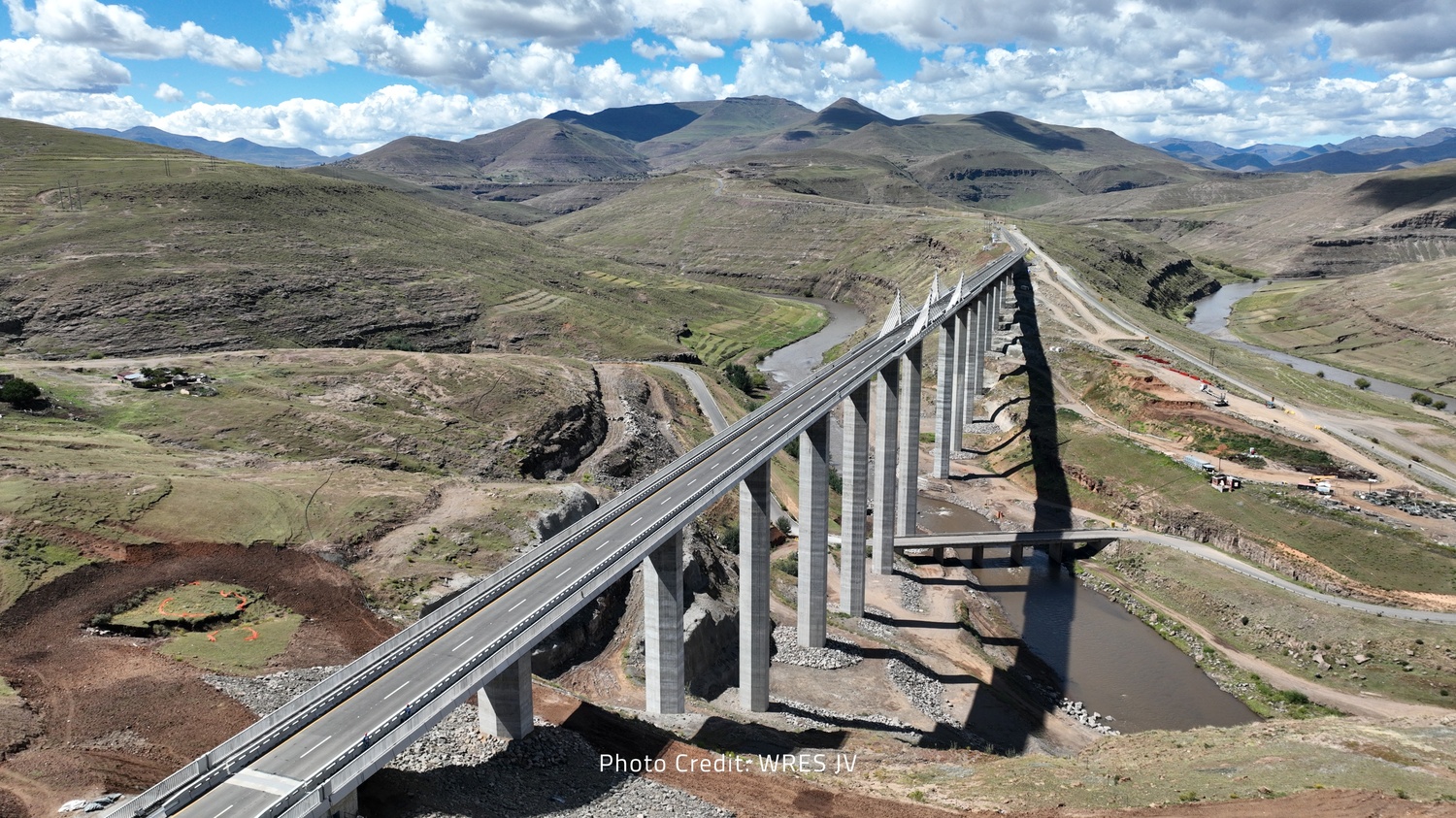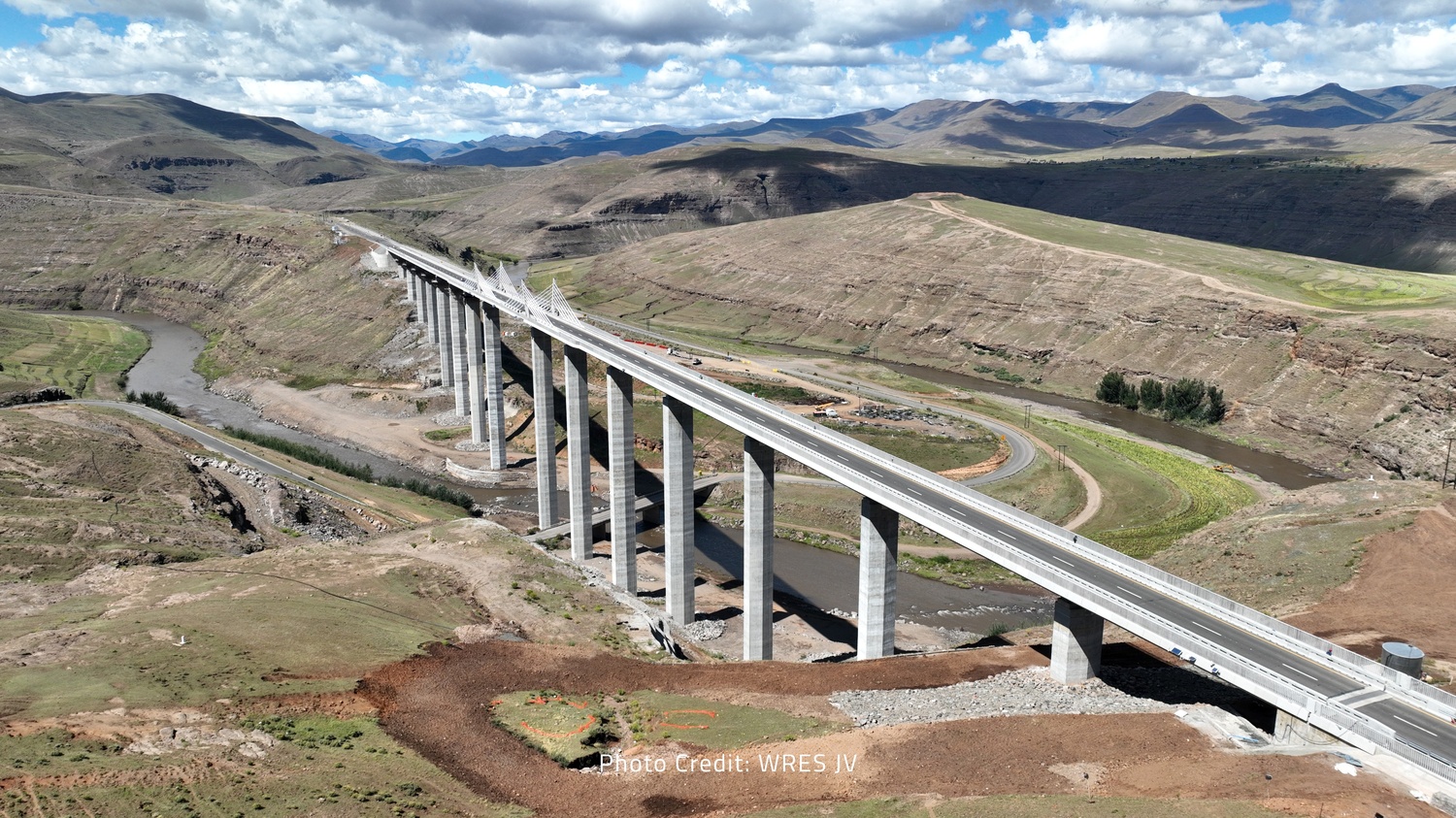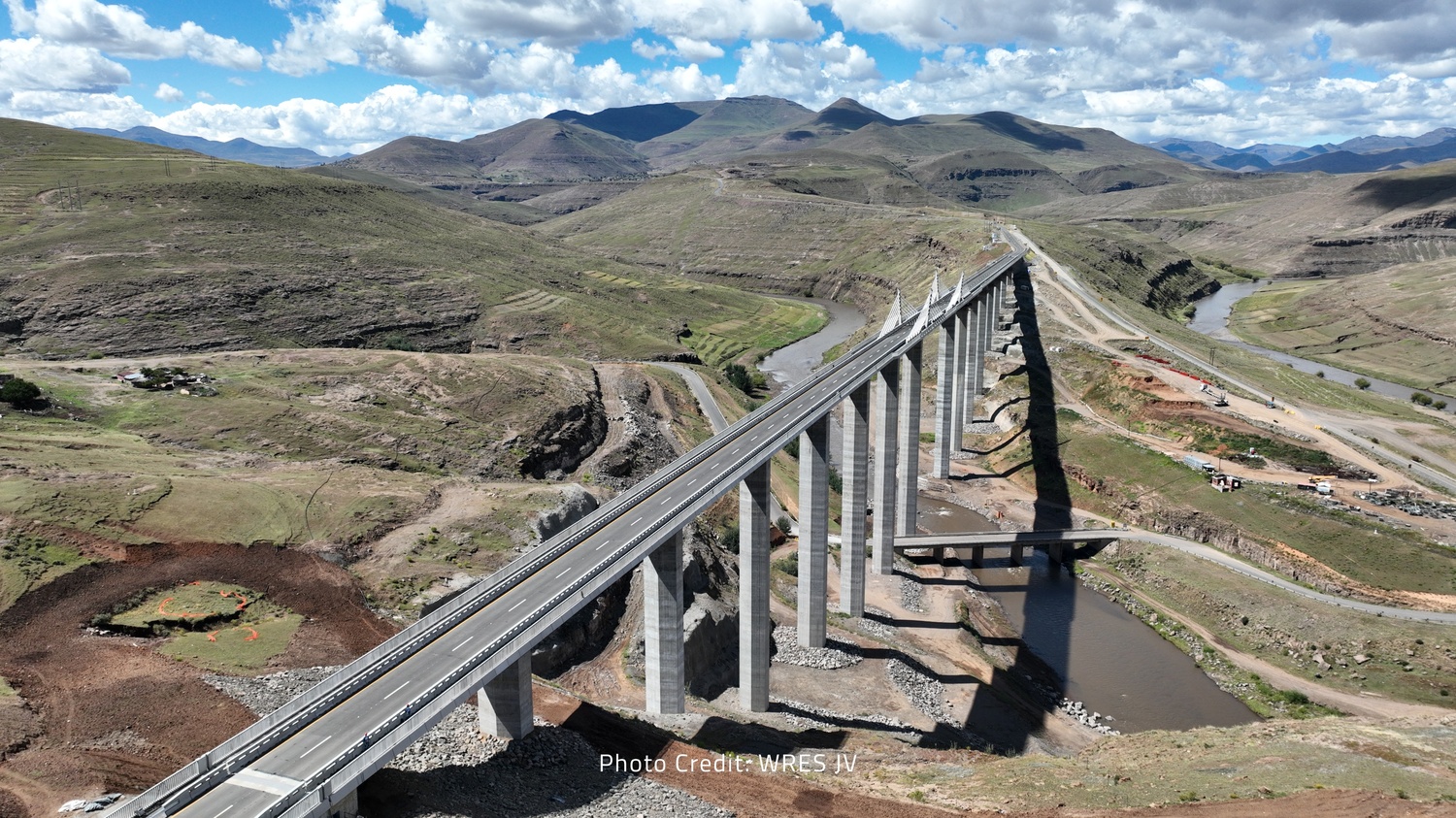
The 825 metre Senqu River Bridge spans the Senqu Valley at an elevation of over 90 metres, maintaining critical road access along the A1 route.
Multinational, buildings and infrastructure engineering consultancy Zutari has played a leading role in the design and construction supervision of the Senqu River Bridge, one of the most ambitious high-altitude infrastructure projects undertaken as part of the Lesotho Highlands Water Project (LHWP) Phase II.
The project is being undertaken in the Kingdom of Lesotho by the Lesotho Highlands Development Authority (LHDA), the implementing and management authority of the LHWP, on behalf of the governments of Lesotho and South Africa.
The Major Bridges Project, which includes the Senqu River Bridge, is being delivered by Zutari Lesotho, together with a Lesotho sub-consultant (White Life Consultants) and a black-owned South African sub-consultant (Leporogo Specialist Engineers). This reflects a collaborative engineering partnership and a long-standing commitment to infrastructure development in the Kingdom of Lesotho.
Spanning 825 metres across the Senqu River valley, the bridge is the longest and highest in Lesotho, rising more than 90 metres above the valley floor. Designed as an extradosed cable-stayed structure, the bridge has been engineered to withstand the extreme conditions of Lesotho’s mountainous terrain while ensuring uninterrupted connectivity along the national A1 route.
The new crossing forms part of a series of major bridges required to maintain road access once the future Polihali reservoir is filled. Sections of the existing A1 route will eventually be submerged as the dam reaches full capacity, making the Senqu Bridge a vital long-term replacement that safeguards regional mobility and economic activity.
Engineering for a changing landscape
The bridge was designed to address the complex environmental and geographic challenges associated with infrastructure development in Lesotho’s highlands. Construction required foundations anchored on rock, as well as advanced construction techniques to navigate the steep valley terrain.
The bridge deck was incrementally launched from both sides of the valley, with precast segments pushed outward until the two sections met at mid-span. This method allowed contractors to construct the bridge safely across the deep gorge while minimising environmental disturbance.
Work on the bridge continued throughout challenging mountain conditions, including winter construction periods, requiring round-the-clock engineering supervision and close coordination between contractors, engineers and project authorities. Louis Joubert, Resident Engineer on the Senqu Bridge project, says the structure represents both technical ambition and long-term national value.
“The Senqu Bridge reflects the engineering ambition behind the LHWP. Beyond the technical achievement, these structures carry real legacy value for Lesotho. As the Highlands landscape evolves, the bridges being built today will stand as enduring symbols of infrastructure excellence and the long-term impact of the project for communities across the region,” comments Joubert.
Supporting national connectivity
Beyond its engineering significance, the Senqu Bridge will play a critical role in maintaining access to the north-eastern region of Lesotho, including the regional capital of Mokhotlong. Once the Polihali reservoir is impounded, the existing low-level crossings will be submerged, making the new bridge essential for maintaining this strategic national route.
The project also forms part of a broader infrastructure programme supporting the development of the LHWP Phase II, which is designed to enhance regional water security while generating long-term economic benefits for Lesotho.
The project has also provided significant opportunities for local engineers and technical professionals. Most of the supervision team on the bridge project consists of Basotho engineers and young professionals who have been mentored throughout the construction process. Through partnerships with the LHDA and other project stakeholders, the initiative contributes to building long-term engineering capacity within the country.
The Senqu Bridge is expected to become a landmark structure within Lesotho’s evolving infrastructure landscape. As the surrounding reservoir fills and the region’s development accelerates, the bridge will continue to serve as a critical transport link while supporting new economic and tourism opportunities.
As part of the broader LHWP, infrastructure investments of this scale demonstrate how strategic engineering partnerships can deliver lasting benefits for both Lesotho and the wider Southern African region.
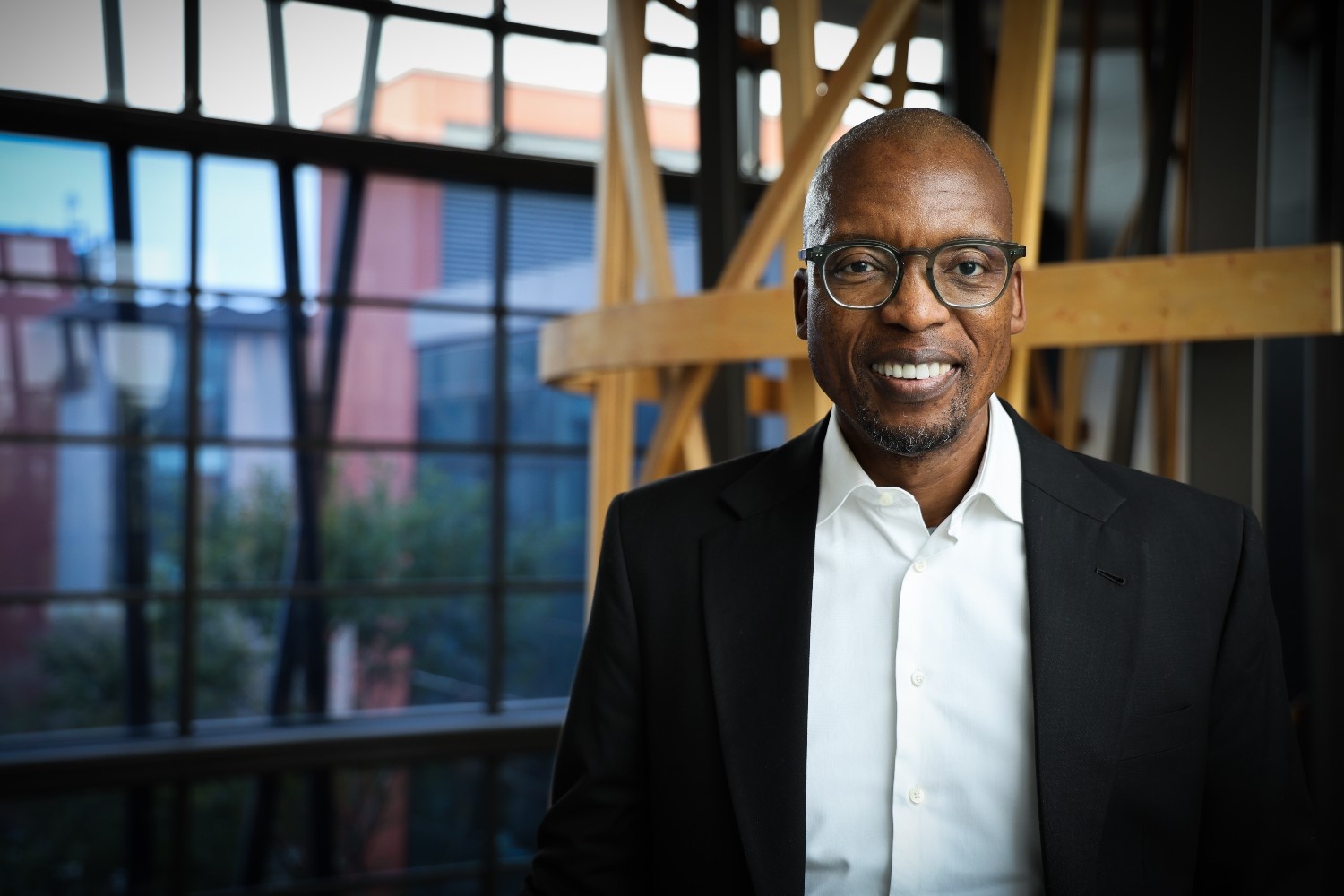
Tlhabeli Ralebitso, CEO: Africa, Zutari, says projects like the Senqu Bridge demonstrate how strategic infrastructure investment can deliver long-term value for both Lesotho and the broader region. “The LHWP stands as one of Africa’s most significant examples of infrastructure delivered through partnership and shared vision.”
Ralebitso concludes: “The Senqu Bridge reflects not only engineering excellence, but also the long-term impact that infrastructure investment can have in strengthening regional water security and hydro-electric power generation, enabling economic growth and supporting communities. Zutari is proud to contribute our expertise to projects that help shape sustainable futures for Lesotho and Southern Africa.”
Ends
Notes to the Editor
To download hi-res images for this news article, please visit http://media.ngage.co.za and click the Zutari link to view the company’s press office.
About Zutari
Zutari is a multinational buildings, infrastructure engineering and advisory firm with a proud legacy of over 90 years across Africa and the Middle East. We partner with clients throughout the infrastructure lifecycle, delivering innovative, digitally enabled solutions from schools to stadiums, dams to bridges.
Our multidisciplinary expertise enables us to co-create infrastructure that is technically excellent, socially meaningful, and environmentally responsible, maximising value through advanced engineering principles and a commitment to sustainability.
Purpose-led work. From renewable energy to resilient infrastructure, our projects solve real-world challenges. Every day is an opportunity to design with purpose and innovate with intent.
People-first culture. We bring together diverse thinkers, creators, and problem-solvers; all driven by a shared commitment to impact. Here, your voice is heard, your growth is supported, and your well-being matters.
Connected by design. We connect differently; across disciplines, geographies, and perspectives, to unlock better outcomes. Our collaborative model breaks silos, integrates global expertise, and brings
creativity and digital innovation into every stage of the project lifecycle. It’s how we deliver real impact, together.
We are Zutari. We are engineering impact.
Zutari Contact
Cambridge Mokanyane
Chief Marketing Officer
Zutari
Email: Cambridge.Mokanyane@zutari.com
Tel: (012) 427 2000
Media Contact
Rachel Mekgwe
Senior Account Executive
NGAGE Public Relations
Phone: (011) 867 7763
Cell: 074 212 1422
Email: rachel@ngage.co.za
Web: www.ngage.co.za
Browse the NGAGE Media Zone for more client news articles and photographs at http://media.ngage.co.za
-
Arial-view-of-the-Senqu-River-Bridge
The-825-m-Senqu-River-Bridge-spans-the-Senqu-Valley-at-over-90-m-high-1
The-new-crossing-forms-part-of-a-series-of-major-bridges-required-to-maintain-road-access-once-the-future-Polihali-reservoir-is-filled
Tlhabeli-Ralebitso-CEO-of-Zutari-Africa - Engineering-the-Senqu-River-Bridge-in-the-Lesotho-Highlands-Water-Project-Phase-II_approved
Engineering-the-Senqu-River-Bridge-in-the-Lesotho-Highlands-Water-Project-Phase-II_approved