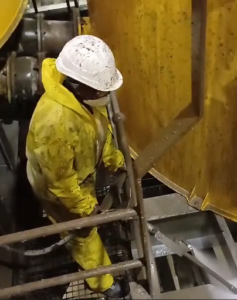
As South Africa faces ongoing water shortages and the growing threat of water-shedding, concerns about the impact on firefighting efforts have emerged. ASP Fire CEO Michael van Niekerk highlights the need for innovative solutions in areas where water supply is compromised.
Water-shedding in South Africa significantly impacts municipal and community firefighting capabilities. It limits the availability of water in municipal reservoirs and hydrants, making it challenging to maintain adequate water pressure and supply during firefighting operations.
With less water available, the risk of fires spreading increases, especially in dry and windy conditions. Firefighters may face delays in accessing water, which can hinder their ability to respond quickly and effectively to any fires.
“It is not just about water shedding but also the general lack of water in some areas,” says van Niekerk. “In fact, I have been involved with projects where water is only available during certain hours. In such cases, building regulations suggest that the owner should assess the risk and, if necessary, provide an on-site water supply. However, there is no legal obligation to do this; it is more of a recommendation.”
Van Niekerk points out that notwithstanding the current regulations, business owners do not fully appreciate the risks of not having a highly reliable, adequate water sources on hand, especially where they have high-risk operations or storage facilities, or have capital intensive production lines, or are exposed to significant business continuity or market loss challenges. However, he stresses the importance of collective efforts in addressing firefighting challenges.
“A unified approach to community firefighting is lacking. For instance, setting up a communal fire tank and pump to serve multiple properties would alleviate the burden on individual owners. It would be cost-effective and provide a reliable water source for firefighting,” he argues.
In rural and semi-rural areas, van Niekerk suggests leveraging existing infrastructure such as farm irrigation systems to supplement water supplies for firefighting purposes. “Using existing resources, like irrigation systems on farms, to supply water for firefighting could be a viable solution in these regions.”
Establishing communal water tanks in strategic locations can ensure a reliable water source for firefighting and other emergency needs. Another proactive measure is to encourage the use of rainwater harvesting systems to supplement water supply for firefighting. Lastly, investing in infrastructure improvements can enhance water storage and distribution systems to reduce the risks associated with a fire brigade rendered useless due to a lack of water.
Ends
Connect with ASP Fire on Social Media to receive the company’s latest news
LinkedIn: https://www.linkedin.com/company/asp-fire-pty-ltd/
About ASP Fire
ASP Fire operates across the entire African continent from its Gauteng base, providing professional, accredited fire risk management and support to its clients. ASP Fire designs, installs, and maintains a full range of fire detection and suppression equipment suited to clients’ needs. ASP Fire provides a holistic, proactive, and preventative fire solution based on integrated fire risk assessment, training, and consulting, with the installation and maintenance of fire detection and suppression systems that meet SABS, NFPA, FPASA, and SAQCC standards.
ASP Fire Contact
Michael van Niekerk
ASP Fire
CEO
Phone: +27 (0) 11 452 2169
Cell: +27 (0) 83 779 1701
Fax: +27 (0) 86 505 1030
Email: michael@aspfire.co.za
Web: www.aspfire.co.za
Media Contact
Thobile Ndlovu
Senior Account Executive
NGAGE Public Relations
Phone: (011) 867-7763
Cell: 073 574 2931
Email: thobile@ngage.co.za
Web: www.ngage.co.za
Browse the NGAGE Media Zone for more client press releases and photographs at http://media.ngage.co.za
-

ASP Fire CEO Michael van Niekerk
Building owners are urged to assess risks and consider on-site water supply.
Water-shedding limits the availability of water in hydrants.
With less water available, the risk of fires spreading increases, especially in dry and windy conditions. - Water-shedding crisis raises alarm for improved firefighting solutions_approved
Water-shedding crisis raises alarm for improved firefighting solutions_approved