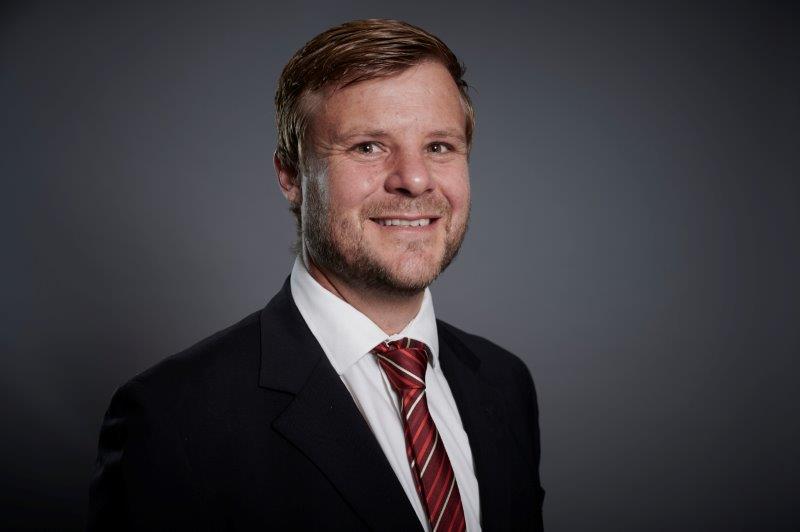
By Lloyd Wallace, Technical Director and Expertise Lead, Infrastructure Advisory, Zutari
At first glance, South Africa’s social infrastructure challenges appear to be about funding. The headline issue is all too familiar: too little money, too many needs. According to the recently released Sustainability at a Crossroad 2025 report, developed by GlobeScan, ERM, and Volans, over half of sustainability experts rate national governments and institutional investors as poor in terms of their contributions to sustainable development.
Only 5% credit national governments as doing excellent work. Institutional investors and the private sector are also rated negatively. In contrast, independent research and academic institutions and NGOs are more widely seen as having made a positive contribution. The report was based on insights from 844 sustainability experts across 72 countries.
As we take a closer look, a more complex reality emerges. In many cases, the funding gap is not the root cause. It is a symptom of deeper, systemic issues that are, fortunately, well within the control of infrastructure managers.
When it comes to infrastructure that serves people such as schools, clinics, public transport, water and sanitation, there is a fundamental tension. Governments and public institutions are often expected to prioritise social impact over financial returns, trading what investors call bankability for community benefit (for example, better education, health, and access to water).
We are yet to convincingly demonstrate the impact of these investments. Without clarity on real, measurable social and economic outcomes, we struggle to make the case for why funding should flow. And because the track record is one of under-delivery on previous investments due to stalled projects, capacity gaps, and implementation delays, we undermine confidence in future efforts.
Many social infrastructure projects do not generate direct revenue, so they are not seen as bankable in the traditional sense. This limits private sector interest, even if the societal need and benefit are huge. So, there is an unspoken tension.
Should we fund only what brings a financial return, or should we also fund what matters most to people, even if it doesn’t pay immediate financial dividends? It calls for new thinking to find ways of financing and structuring social infrastructure so that both impact and investor confidence are possible, through blended finance, guarantees, or outcome-based contracting.
This credibility challenge starts with how projects move (or do not move) through the development pipeline. The track record for advancing projects from concept through feasibility to execution is patchy at best. As a result, even secured funding is often underutilised or ineffectively deployed.
This failure to convert ambition into outcomes directly weakens the appetite of funders and partners to invest further. To unlock more funding, the sector first needs to extract more value from existing resources. That means delivering better, more efficiently, more transparently, and more strategically. Three core shifts are required:
Clarify the value of impact
Impact is not just about outputs like classrooms built or clinics refurbished. It is about outcomes. What tangible improvements will communities, learners, and local businesses experience? Every social infrastructure project should have a clearly articulated set of strategic objectives linked to social and economic benefits. This includes doing away with infrastructure programmes with sweeping and overly high-level objectives in favour of specific programs that target precise strategic objectives.
Fix the delivery machinery
Many of the constraints lie in the system’s ability to deliver. Implementing agents often lack the capacity, capability, or authority to drive complex projects through development stages. Contract management is another bottleneck leading to delays, cost overruns, and poor performance. If implementation cannot be managed effectively, making a compelling case for further investment becomes impossible. While failure in mutual contract management may benefit one party in the short term, it creates an unsustainable environment where neither party thrives long term.
Reform how we design and structure projects
Instead of chasing large, unwieldy mega-programmes, we should structure smaller, strategic infrastructure streams that tackle specific, high-impact challenges. Use innovative procurement models that share risk more effectively with private sector partners, while ensuring government has the tools and resources to hold them to account.
The opportunity is that we can deliver more and better infrastructure with the funding we already have. If we do this well, we lay the groundwork to attract more capital, especially blended and catalytic funding that hinges on both credibility and clarity of impact.
Ultimately, all roads lead to a blended finance model that combines public resources, private capital, skills and agility, and development finance to deliver high-impact infrastructure. But to get there, we must first address the basics of cleaning up the pipeline, clarifying the value, and proving we can deliver.
Funding is not the only missing ingredient in South Africa’s social infrastructure equation. Trust, delivery capability, and demonstrable impact matter just as much. Get those right and the funding will follow.
Ends
Notes to the Editor
To download hi-res images for this news article, please visit http://media.ngage.co.za and click the Zutari link to view the company’s press office.
About Zutari
We are Zutari. We engineer futures.
We are the enablers of progress, transforming ambition into lasting impact.
We are not defined by ideas alone, but by the vibrant communities we connect, the thriving economies we empower, and the sustainable futures we create.
For over 90 years, our roots have grown deep in the heart of Africa and the Middle East. We understand the rhythm of these lands, their unique challenges and boundless potential. We’ve witnessed firsthand how thoughtfully engineered infrastructure can ignite the flow of progress; connecting people, unlocking opportunities, and shaping generations to come.
We don’t just design structures; we design possibilities.
We don’t just manage projects; we unlock futures free from the constraints of yesterday.
We don’t just create infrastructure; we shape living legacies.
Driven by a deep understanding of our clients’ aspirations and an unwavering commitment to excellence, we infuse every project with ingenuity and care. We embrace digital innovation, not as an end in itself, but as a catalyst for transformative change. Through data- driven insights and advanced engineering principles, we craft sustainable solutions that make a real difference, today and for generations to come.
Our work is a testament to the power of human creativity and collaboration.
It’s in the clean water that flows through a community, the renewable energy that powers a city, the vibrant spaces where individuals learn, grow, and thrive.
Every data- driven insight, every design, every carefully considered decision— it all contributes to a future engineered for possibility.
We are Zutari. We are engineering impact.
Zutari Contact
Cambridge Mokanyane
Chief Marketing Officer
Zutari
Email: Cambridge.Mokanyane@zutari.com
Tel: (012) 427 2000
Media Contact
Rachel Mekgwe
Senior Account Executive
NGAGE Public Relations
Phone: (011) 867 7763
Cell: 074 212 1422
Email: rachel@ngage.co.za
Web: www.ngage.co.za
Browse the NGAGE Media Zone for more client news articles and photographs at http://media.ngage.co.za
-

Lloyd Wallace Technical Director and Expertise Lead Infrastructure Advisory at Zutari - Unlocking social infrastructure funding in South Africa starts by getting the basics right_approved
Unlocking social infrastructure funding in South Africa starts by getting the basics right_approved