Why successful shutdowns depend on preparation, readiness and execution discipline
By Clive Garner, Operations Director of Industrial Project Solutions, Aurex Constructors
Having supported industrial shutdowns, turnarounds and outage events across the mining, chemical, oil and gas, energy and heavy industrial sectors, one observation that remains remarkably consistent is that successful shutdowns are rarely defined by the quality of the schedule alone.
Most organisations today understand the importance of planning. Detailed schedules, risk assessments, work packs and resource plans have become standard practice across the industry. Yet despite significant investment in planning processes, shutdowns still experience delays, cost overruns, scope growth and productivity losses.
As an execution contractor working across multiple operating environments, we often find that the differentiator between a successful shutdown and a troubled one is not the plan itself, but the organisation’s ability to execute that plan with certainty when the shutdown is live.
Execution certainty is what separates predictable outcomes from reactive management. It is the ability to safely deliver the agreed scope within the available window while effectively managing the realities and uncertainties that inevitably emerge during execution.
The reality of shutdown execution
No industrial shutdown occurs in a perfectly controlled environment. Equipment inspections uncover unexpected findings. Scope changes emerge. Material deliveries are delayed. Contractor interfaces become more complex than anticipated. Operational priorities shift. Decisions are required under pressure.
These are not exceptions to the process but a normal part of industrial project execution. The challenge is not eliminating uncertainty. The challenge is building sufficient preparation, and execution capability into the shutdown strategy to manage uncertainty without compromising safety, quality or schedule performance.
From our experience, many of the execution challenges encountered during a shutdown can be traced back to issues that existed during the planning phase. Incomplete scope definition, procurement gaps, unresolved interfaces, resource constraints and inadequate readiness often become highly visible once the shutdown clock starts running. By that stage, however, the cost and schedule impact of resolving these issues has increased significantly.
Preparation creates predictability
The most successful shutdowns treat preparation as a strategic investment rather than an administrative requirement. Before mobilisation begins, there should be clear alignment between all stakeholders regarding scope, priorities, responsibilities, interfaces and expected outcomes. The execution team should understand not only what work must be completed, but also how that work will be delivered, sequenced and controlled.
For contractors, this level of preparation enables labour planning, equipment allocation, procurement activities and execution methodologies to be established with confidence. For customers, it creates greater certainty around schedule performance, cost control and operational readiness.
Scope definition plays a particularly important role. Poorly defined scope introduces risk into every subsequent stage of execution. Labour requirements become uncertain, material quantities become unreliable, work packs become incomplete and schedules become increasingly vulnerable to disruption. Conversely, a clearly defined scope allows both operators and contractors to focus on efficient execution rather than managing ambiguity. In practical terms, predictability is established long before the first work permit is issued.
Planning for the unknown
One of the most common misconceptions in shutdown management is that success depends on creating a perfect plan. In reality, successful shutdowns are built around the expectation that not everything will go according to plan. The objective should not be to eliminate uncertainty but rather to develop the organisational capability to respond effectively when conditions change.
This requires robust risk identification, detailed asset inspections, contingency planning, supply chain assessments and readiness reviews before mobilisation. It also requires clearly defined escalation processes and decision-making pathways during execution.
When unexpected issues arise, organisations need the ability to assess impacts quickly, make informed decisions and implement corrective actions without losing momentum. Execution certainty is ultimately measured by how effectively teams respond when faced with the unexpected.
Coordination is a critical success factor
Industrial shutdowns typically involve numerous contractors, specialist vendors, customer teams and operational stakeholders working simultaneously in highly constrained environments. In these circumstances, coordination becomes one of the most important drivers of success.
A delay affecting one work front can quickly impact multiple downstream activities. A missing component, unresolved interface or delayed decision can create consequences far beyond its immediate area of responsibility. Experience shows that effective coordination requires more than daily progress meetings and reporting structures. It requires a single integrated execution strategy, shared visibility of progress, clearly defined accountabilities and rapid issue resolution.
The most successful shutdowns foster collaboration between operators, maintenance teams, project teams and contractors around a common objective: completing the shutdown safely and efficiently while protecting the integrity of the facility. Execution certainty becomes a shared responsibility rather than an individual contractor obligation.
Readiness must be proven
In many organisations, readiness is often viewed as the completion of a checklist. In practice, genuine readiness requires a higher level of verification. Before a shutdown begins, organisations should have confidence that the required workforce, equipment, materials, specialist resources, access arrangements and logistics systems are fully prepared to support execution. Contractors should be mobilised and aligned. Materials should be available where and when required. Critical equipment should be inspected and certified. Safety systems and controls should be verified.
The reality is that shutdowns provide very little opportunity to recover from fundamental readiness failures. Discovering during execution that a critical material has not arrived, a specialist resource is unavailable, or a key interface remains unresolved can immediately impact productivity and schedule performance. True readiness is measured by the ability to execute, not by the completion of planning documentation.
Leadership and decision velocity
As shutdowns progress, the importance of leadership becomes increasingly apparent. From an execution perspective, one of the greatest threats to schedule performance is delayed decision-making. Information delays quickly become schedule delays.
High-performing shutdown teams establish clear authority levels, escalation pathways and communication structures before work begins. They ensure that emerging problems can be rapidly escalated, assessed and resolved by the appropriate level of leadership. This does not mean making rushed decisions.
It means making informed decisions quickly enough to prevent minor issues from becoming major disruption events. The ability to maintain decision velocity while preserving safety and quality standards is a defining characteristic of shutdowns that consistently achieve their objectives.
Efficiency without compromise
Every shutdown operates under commercial pressure. Operators seek to minimise downtime and restore production as quickly as possible. Contractors strive to maximise productivity within tightly constrained execution windows.
However, genuine efficiency is not achieved through shortcuts. An asset that restarts on schedule, but experience’s reliability issues, quality defects, leaks or safety incidents shortly thereafter cannot be considered a successful outcome. The most effective shutdowns achieve schedule performance through preparation, coordination, disciplined execution and strong leadership.
Success should therefore be measured using a broader set of criteria that includes safety performance, scope completion, quality outcomes, cost control, productivity, reliability and leak-free startup performance. These indicators provide a far more meaningful measure of shutdown success than schedule alone.
Lessons from repeated delivery
One advantage of operating across multiple customers and industrial sectors is the ability to observe recurring patterns. While facilities, assets and production processes may differ significantly, the underlying drivers of shutdown success remain remarkably consistent.
Projects that perform well are characterised by disciplined preparation, clear scope definition, effective stakeholder alignment, rigorous readiness processes and decisive execution leadership. Projects that struggle often exhibit the opposite characteristics.
This reality reinforces an important lesson for both operators and contractors: execution certainty is not created during the shutdown itself. It is built progressively through the decisions made in the months leading up to execution.
The human factor remains decisive
Technology continues to improve planning, reporting and execution visibility. Digital scheduling platforms, real-time progress monitoring and performance analytics provide valuable insight throughout the shutdown lifecycle.
However, technology remains an enabler rather than a substitute for effective execution. Ultimately, industrial shutdowns are delivered by people. Experienced supervisors, planners, project managers, engineers, tradespeople and leadership teams remain the foundation of successful execution. Their experience, judgement and ability to respond decisively under pressure continue to be the most important contributors to shutdown performance.
For organisations seeking greater shutdown certainty, the focus should extend beyond schedules and systems. Equal emphasis should be placed on preparation, leadership capability, contractor integration and workforce readiness. Because when shutdowns are measured in lost production per hour, execution certainty is no longer simply a project management objective. It is a strategic advantage.
Ends
Connect with Aurex Constructors on Social Media to receive the company’s latest news
LinkedIn: https://www.linkedin.com/company/aurex-constructors/
Facebook: https://www.facebook.com/aurexconstructors
Notes to the editor
To download hi-res images for this release, please visit http://media.ngage.co.za and click on the Aurex Constructors link to view the company’s press office.
About Aurex Constructors
Aurex Constructors is a leading player in South Africa’s Construction, Turnaround, and Maintenance industry, with over 40 years of experience serving blue-chip customers in the oil, gas & chemicals, mining & metallurgy, petrochemical, thermal power, and renewable power sectors. The company operates offices in South Africa, Mozambique, and Namibia, providing a comprehensive range of services including civil, structural, mechanical, electrical, instrumentation, piping, platework (CSMEIPP), fabrication, and management services, catering to projects of any scale and complexity.
As a 100% South African owned and managed company with 51% black ownership, Aurex takes pride in its highly skilled workforce, which has a proven track record of delivering innovative and customised project management solutions tailored to the specific requirements of customers. Aurex Constructors is dedicated to fostering growth and sustainability in the regions it serves. We strive for excellence.
Aurex Constructors Contact
Lauryn Joseph
Head of Marketing, Communications, and Branding
Phone: +27 11 203 9600
Cell: 078 804 0662
Email: lauryn.joseph@aurex.com
Media Contact
Thobile Ndlovu
Senior Account Executive
NGAGE Public Relations
Account Executive
Telephone: 011 867 7763
Cell: 073 574 2931
E-mail: thobile@ngage.co.za
Website: www.ngage.co.za
Browse the NGAGE Media Zone for more client news articles and photographs at http://media.ngage.co.za
-

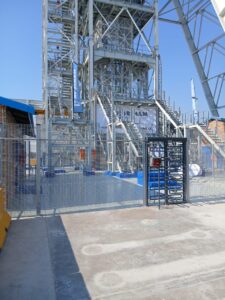
Natref refinery near Sasolburg. The mining, chemical, oil and gas, energy and heavy industrial sectors need to navigate uncertainty in their shutdown strategies
Clive Garner, Operations Director at Aurex - Execution certainty is the difference between planning a shutdown and delivering one_approved
Execution certainty is the difference between planning a shutdown and delivering one_approved