Digitalisation, automation, and data-driven decision-making are rapidly transforming the global milling industry, with SmartMill approach emerging as a key pathway to improved efficiency, consistency, and competitiveness. These trends were highlighted by Swiss technology company Bühler during its presentation at the 90th congress of the National Chamber of Milling (NCM) in mid-March, in Knysna, Western Cape.
Speaking at the event, Fabio Curatolo, Senior Customer Relationship Manager at Bühler Southern Africa, highlighted how the SmartMill concept is helping millers respond to growing operational pressures, tighter margins, and increasing quality and compliance demands.
“Industry platforms such as the NCM congress are extremely valuable because they bring together milling leaders and technology partners to share real-world experiences and align on what the industry needs,” says Curatolo. “These conversations help translate the idea of the SmartMill into practical priorities that millers can implement in their operations.”
In fact, SmartMill is not an end product, but more of a concept made up of hundreds of complementary innovations designed through close collaboration with the industry. According to Curatolo, the SmartMill represents a shift towards more connected, transparent, and automated milling operations. By integrating sensors, digital platforms, and advanced analytics, mills can move from manual checks and experience-based decisions to real-time, data-driven process control.
“The SmartMill means using connected equipment, sensors and software to make milling operations more predictable and responsive,” explains Curatolo. “Operators can rely on real-time data to maintain optimal performance, ensure consistent quality, and react faster to deviations.”
Millers face a complex operating environment
Millers today face a complex operating environment. Volatile raw material quality, rising energy and utility costs, maintenance reliability challenges, and skills shortages are making consistent production performance more difficult to maintain. At the same time, the market is demanding tighter margins, greater traceability, and higher standards of food safety and quality.
“In South Africa, these pressures are even more pronounced because of energy instability and rising operating costs,” notes Curatolo. “SmartMill technologies help millers address these challenges by improving process control, strengthening traceability, and making operations more resilient.”
Digital monitoring and data collection play a central role in this transformation. “Data turns milling from a ‘best effort’ operation into a controlled, evidence-based process,” says Curatolo. “By analysing trends and detecting changes early, mills can adjust parameters proactively, prevent downtime, and maintain consistent output.”
Transition to the SmartMill approach
Bühler supports millers in their transition to SmartMill through a comprehensive approach that spans consulting, engineering, digital solutions, and ongoing operational support. “Our goal is to help millers translate data into measurable improvements in yield, energy use, and plant performance,” says Curatolo. Among the technologies helping enable this transformation are advanced automation systems, digital production management platforms, and specialised process optimisation tools. For example, Bühler’s digital platforms like Bühler Insights and ProPlant allow millers to organise and monitor maintenance, production, and process data in real time. Solutions such as temperature and vibration monitoring help optimise grinding performance and reduce energy consumption.
One advantage of the SmartMill approach lies in it being an incremental journey rather than a revolutionary moment, allowing customers to join at the point that best suits their business. While the speed and direction of the journey is up to each company, everyone needs to start from the same point.
According to Bühler’s experts, anyone thinking of being part of the journey in the near future should be thinking now about installing sensor technology and the connectivity that offers the necessary production transparency that informs decision making, because this is the foundation of the whole SmartMill process.
Milling sector sees increased digitilisation
Curatolo expects digitalisation in the milling sector to accelerate significantly over the next decade. “We expect stronger automation, wider use of AI-driven analytics for process optimisation, predictive maintenance, and increasing expectations for full traceability across the value chain,” he says. “Sustainability will also be a major driver, pushing mills to reduce energy use, emissions, and waste, while improving resource efficiency.”
However, Curatolo emphasises that a successful SmartMill journey requires more than simply installing new technologies. “The SmartMill works best when it is implemented as a practical, step-by-step programme,” he says. “Clear performance targets, a reliable data foundation, and strong operator engagement are essential. When those elements come together, the result is more efficient, resilient, and competitive milling operations.”
Innovation remains at the core of Bühler’s long-term competitiveness and its ability to create impact for customers. In 2025, R&D expenditure amounted to 4.8% of turnover, with Bühler launching 60 new products successfully into market to reinforce its commitment to purposeful innovation driving performance and sustainability. Bühler’s innovation capability is supported by Bühler’s global innovation network of 26 research and training centres.
Media contacts:
Taryn Browne, Head of Marketing, Southern Africa
Bühler (Pty) Ltd.
Bühler Southern Africa
Phone: +27 11 801 3500
Mobile: +27 66 307 4618
E-mail: taryn.browne@buhlergroup.com
Dalen Jacomino Panto, Media Relations Manager
Bühler AG, 9240 Uzwil, Switzerland
Phone: +41 71 955 37 57
Mobile: +41 79 900 53 88
E-mail: dalen.jacomino_panto@buhlergroup.com
Katja Hartmann, Media Relations Manager
Bühler AG, 9240 Uzwil, Schweiz
Mobile: +41 79 483 68 07
E-mail: katja.hartmann@buhlergroup.com
About Bühler
Bühler is driven by its purpose of creating innovations for a better world, balancing the needs of economy, humanity, and nature in all its decision-making processes. Billions of people come into contact with Bühler technologies as they cover their basic needs for food and mobility every day. Two billion people each day enjoy foods produced on Bühler equipment; and one billion people travel in vehicles manufactured using parts produced with Bühler solutions. Countless people wear eyeglasses, use smart phones, and read newspapers and magazines – all of which depend on Bühler process technologies and solutions. As a technology partner with this global relevance, Bühler is in a unique position to help unlock new pathways to profitable sustainability and, through its solutions and services, turn global challenges into opportunities.
For this reason, in 2019, Bühler committed to having the solutions ready to multiply that reduce energy, waste, and water by 50% in the value chains of its customers. In 2025, it established that in 11 of the key 15 value chains, reductions of at least 50% are feasible in one or more key environmental dimensions. Across all value chains, savings of more than 35% are achievable in at least one category. The company is now focused on driving adoption and scaling these solutions further to multiply impact. In its own operations, Bühler has developed a pathway to achieve a 60% reduction in greenhouse gas emissions by 2030 (Greenhouse Gas Protocol Scopes 1 & 2, against a 2019 baseline).
Bühler spends up to 5% of its turnover on research and development annually to improve both the commercial and sustainability performance of its solutions, products, and services. In 2025, the company employed 12,090 people who generated a turnover of CHF 2.8 billion. As a Swiss family-owned company with a history spanning 166 years, Bühler is active in over 140 countries around the world and operates a global network of 105 service stations, 27 manufacturing sites, and research and training centers in 26 locations.
-

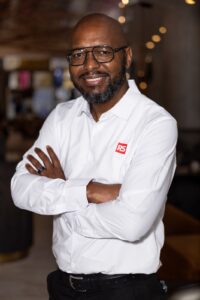
Fabio-Curatolo-Senior-Customer-Relationship-Manager-at-Buhler-Southern-Africa-1 - Buhler-SmartMill-set-to-shape-the-future-of-milling_approved
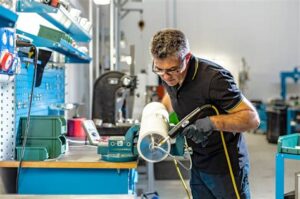
Buhler-SmartMill-set-to-shape-the-future-of-milling_approved