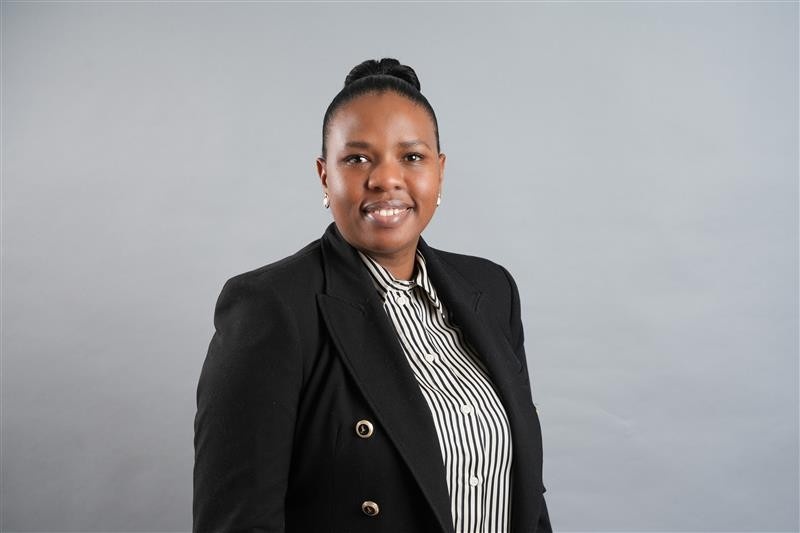
By Sthembile Mnengela, Technical Director, Zutari
There has never been an infrastructure project that has ever been delivered without risk and uncertainty. All projects have a level of risk which engineers are well trained to anticipate, manage, and mitigate. Risk management is so well embedded in infrastructure engineering that just about every design manual has factors in place that help minimise risks.
Armed with these design and construction manuals, engineers tame rivers into concrete dams. Successful delivery of any infrastructure project involves mitigating and managing a myriad of risks and engineers have been doing this successfully for centuries.
If engineers are so good at managing risk, how is it that risk management has become increasingly more difficult, and risk registers longer than ever? Change! The dynamic nature of the type of risks that engineers face today is much different to the risks they were trained to anticipate, manage, and mitigate.
The trusted manuals help mitigate the risk of crashes due to traffic signals being green for two conflicting movements at the same time or the risk of bridges collapsing under various loading scenarios. However, none of the manuals help engineers deal with rapid and severe changes in weather patterns, or sudden funding shortfalls caused by developments in faraway lands that do not just slow projects down but grind them to a halt.
Neither do they help deal with irate stakeholders that object to a project because they were never included in the planning. Engineers are analytical, conscientious and very methodical, with years of university training inculcating these crucial traits. This is the reason that infrastructure often lasts beyond its intended lifespans because engineering methods applied are tried, tested and proven.
Risks, however, are never methodical and, in this ever-changing world, risks that can stop a project are dynamic and mostly unforeseen. As soon as one risk is mitigated, another materialises. Engineering training inclines engineers to try and eliminate risk, then continue as planned, yet risk cannot be fully mitigated away. It can, in fact, be embraced, and opportunities presented by every risk can be beneficial.
Embracing risk goes against the very nature of engineering professionals. No engineer has ever said: “Embrace risk!” However, there are industries that do just that. The tech industry embraces risk and thus thrives in dynamic environments. Tech products are developed in rapid iterations of trial, fail, and learn.
Granted, we cannot afford to adopt the same try and fail methods when it comes to infrastructure projects. However, engineers can benefit from thinking in an agile manner when planning, managing, and ultimately delivering infrastructure projects.
Several established, agile methodologies already exist in the broader world of project management which engineers can tap into to develop a more agile ways of managing risk. For example, in infrastructure projects there are mainly three decision gate stages where go/no go decisions are made. These are the project feasibility, planning, and design stages.
During the construction phase, the project is largely implemented in accordance with an approved design, with only minor changes where necessary. In this ever-changing world of dynamic risks that are often difficult to anticipate, should there not be better risk planning and more decision gates to account for risks?
Can risks to funding be actively anticipated by having approved ‘scaled back’ designs that supplement the ‘as intended’ designs or, perhaps, actively include the customer/user in design iterations? Can engineers truly co-create with communities and other project stakeholders instead of just obtaining buy-in, thereby embracing the risks that may come with this collaborative process?
These questions require a shift in mindset, one where risks are leveraged rather than avoided, where a user requirement analysis is the norm rather than the exception, where no stakeholder is required to just ‘buy in’ to the project but where engineers, communities, funders, and implementing agencies truly co-create and have needs met rather than just kept satisfied.
Universities hold great power in shaping young engineering minds, and young minds hold great creative potential that has not yet learned to be risk averse. This is the right environment for experienced engineers to impart the methodical conscientiousness for young minds to embrace new, more agile methodologies of managing risk. Universities produce excellent engineers, but there is room for added agility in risk management. The modern engineer needs to leverage the opportunities presented by risk. This uncertain, everchanging global environment demands it.
Ends
Notes to the Editor
To download hi-res images for this news article, please visit http://media.ngage.co.za and click the Zutari link to view the company’s press office.
About Zutari:
Zutari, a leading buildings and infrastructure engineering and advisory firm with a proud legacy of over 90 years across Africa and the Middle East. We partner with clients throughout the infrastructure lifecycle, delivering innovative, digitally enabled solutions across sectors like: Buildings, Water, Mining, Energy, Transport and Sustainability. Co-creating locally relevant, globally eminent solutions, we prioritise impact, purpose, and people. At Zutari, we don’t just design infrastructure, we create possibilities, unlock futures, and shape living legacies that uplift communities and redefine what’s possible for generations to come.
For more details, visit www.zutari.com.
Zutari Contact
Cambridge Mokanyane
Chief Marketing Officer
Zutari
Email: Cambridge.Mokanyane@zutari.com
Tel: (012) 427 2000
Media Contact
Rachel Mekgwe
Senior Account Executive
NGAGE Public Relations
Phone: (011) 867 7763
Cell: 074 212 1422
Email: rachel@ngage.co.za
Web: www.ngage.co.za
Browse the NGAGE Media Zone for more client news articles and photographs at http://media.ngage.co.za
-

Sthembile Mnengela Technical Director at Zutari - Risk management Delivering projects amidst global uncertainties approved
Risk management Delivering projects amidst global uncertainties approved