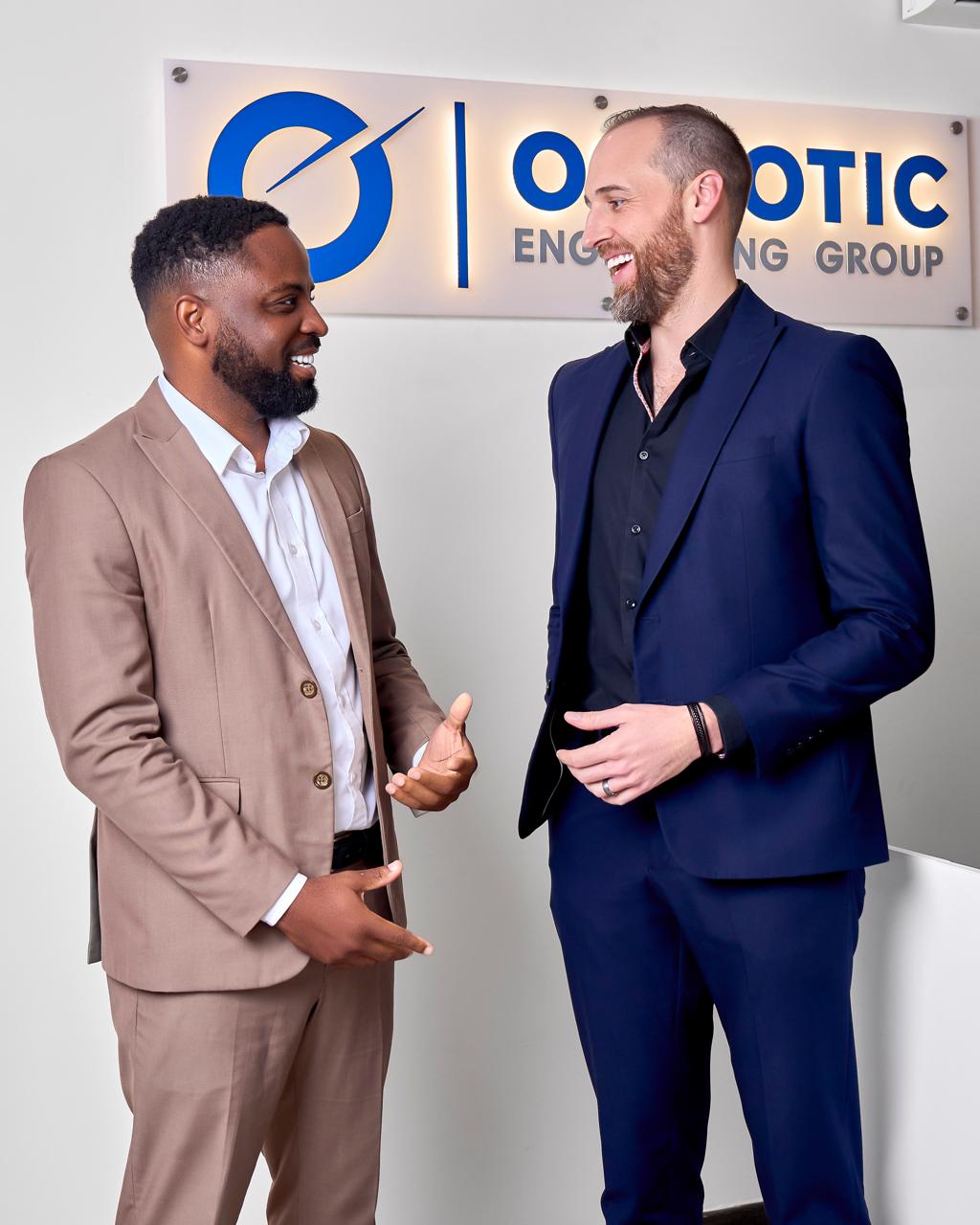
Having established a strong foundation in infrastructure advisory across Africa, Osmotic Engineering Group is leveraging its project experience, technical expertise and growing international partnerships to pursue opportunities in the United States, Australia and the Middle East.
As 2026 draws to a close, infrastructure advisory firm Osmotic Engineering Group (OEG) is entering a new phase of its development. Having spent its formative years establishing a track record across Africa, the company is now translating that experience into international opportunities, with a growing presence in the United States and projects and partnerships emerging in other global markets.
For OEG, this expansion represents more than geographical diversification. It is the next stage in a deliberate strategy to demonstrate that an African consulting business can develop internationally competitive expertise, build trusted relationships across different markets and deliver value beyond its home continent.
The year has also seen the company strengthen its internal operational capabilities, secure significant project milestones across its energy and water advisory portfolios and achieve three internationally recognised ISO certifications.
Andrew Johnson, CFO and Energy Director at OEG, says the business has reached an important point in its development, having established the track record and reputation necessary to support its next phase of growth. “If I can break it down into phases, I would say that phase one was about building the foundation, establishing a track record and developing our reputation and ways of working. We have achieved that. Now we are standing on that foundation and reaching further.”
Taking African expertise to international markets
One of OEG’s most significant developments during 2026 has been the advancement of its international expansion strategy, particularly in the United States. The company has registered an entity in Texas, where CEO Dr Tony Igboamalu is now based, and has begun building a network of prospective clients and strategic partners. OEG has also secured inclusion on a US government supplier database, providing another avenue through which to explore opportunities in the market.
The strategy recognises that while OEG brings substantial infrastructure and project advisory experience from Africa, successful market entry also requires an understanding of local regulatory environments, industry requirements and business practices.
Establishing relationships with experienced local partners will therefore be an important component of its approach. Dr Igboamalu believes that the company’s African origins and experience should be regarded as an asset rather than a limitation. “It does not matter how small a company is; it can still achieve globalisation, particularly in the advisory services it offers. The idea is to grow the business on a global scale.”
He emphasises that OEG’s international ambitions are rooted in the experience it has accumulated across African markets. “Our strategy is to take our experience in Africa and build trust internationally. It is not about bringing an international business into Africa but about taking an African business to the international level.”
This approach is already producing tangible results elsewhere. OEG has secured an Australian project involving energy supply for a mining development, following a referral from an Australian client with whom the company had previously worked on an African project.
The recommendation demonstrates how successfully delivered work in one market can create opportunities in another, with OEG now pursuing an additional lead in Australia. The company has also begun exploring opportunities in the Middle East, including the United Arab Emirates, where it is assessing the requirements and potential partnerships needed to establish a presence.
For Johnson, these developments represent an opportunity to test the transferability of OEG’s technical and advisory capabilities across different markets. “These opportunities allow us to understand which parts of our existing knowledge and experience are applicable elsewhere, and where we need to complement that with country-specific expertise,” he says.
The diversification also reduces the company’s reliance on any single market, while creating opportunities to develop complementary relationships and access different sources of expertise and investment.
Strengthening the foundations for sustainable growth
International expansion requires more than an established project portfolio. It also demands robust internal systems, consistent quality management and demonstrable compliance with internationally recognised standards. During 2026, OEG achieved certification against three ISO standards: ISO 9001 for quality management, ISO 14001 for environmental management and ISO 45001 for occupational health and safety.
The certification process, which took about six months, involved reviewing the company’s existing operational practices, identifying gaps, implementing additional policies and procedures and undergoing internal and external audits. Johnson says the decision was driven primarily by a desire to strengthen the business internally and provide clients with additional assurance.
“We have been around for a while and we are growing. We have been putting our own systems in place internally but wanted a benchmark against which to measure ourselves and make sure we had the right systems in the right places. It is good for us internally to ensure that things are being done properly, but it also gives our clients confidence that the business is operating effectively,” he says.
The certifications also strengthen OEG’s position when competing for projects where formal quality, environmental and health and safety management systems are prerequisites. Maintaining the standards will now become an ongoing responsibility, with regular internal reviews and annual external audits forming part of the company’s operational framework.
Delivering progress across Africa’s infrastructure landscape
While international expansion is an increasingly important component of OEG’s strategy, the African market remains central to the company’s business and expertise. In South Africa, the company has continued to support significant public-sector energy initiatives, including its appointment alongside PwC and legal advisers CDH to provide technical advisory services for the establishment of Eskom Green, officially launched at an event at the Inanda Club, Johannesburg, in June 2026.
The assignment has involved supporting the development of Eskom’s renewable energy subsidiary, from reviewing its existing renewable energy project pipeline and organisational requirements to advising on business processes, market positioning and strategy. The project is now approaching completion, with OEG having contributed specialist energy-sector knowledge to a broader management consulting assignment.
The company has also continued its work with municipalities in the Western Cape, supporting the procurement of renewable energy from independent power producers (IPPs). Its three-year appointment with Stellenbosch Municipality, through the Western Cape Government, has progressed from initial feasibility studies and procurement processes to the selection of two preferred bidders for solar developments. OEG is now supporting these developers as they work towards financial close, anticipated in 2027, subject to the necessary permitting and approvals.
During the year, OEG also commenced a three-year appointment as transaction adviser to the City of Cape Town, where it is supporting the municipality’s engagement with prospective IPPs and energy traders. Further strengthening its municipal advisory portfolio, OEG’s asset management team completed three cost-of-supply studies for smaller Western Cape municipalities through a provincial government panel appointment, working in partnership with Zutari.
The company also delivered a solar photovoltaic feasibility study for the municipality of Oudtshoorn. These diverse assignments demonstrate the breadth of OEG’s advisory capabilities, extending beyond individual engineering projects to encompass procurement, transaction structuring, asset management and the commercial considerations underpinning infrastructure development.
Building a track record in water infrastructure
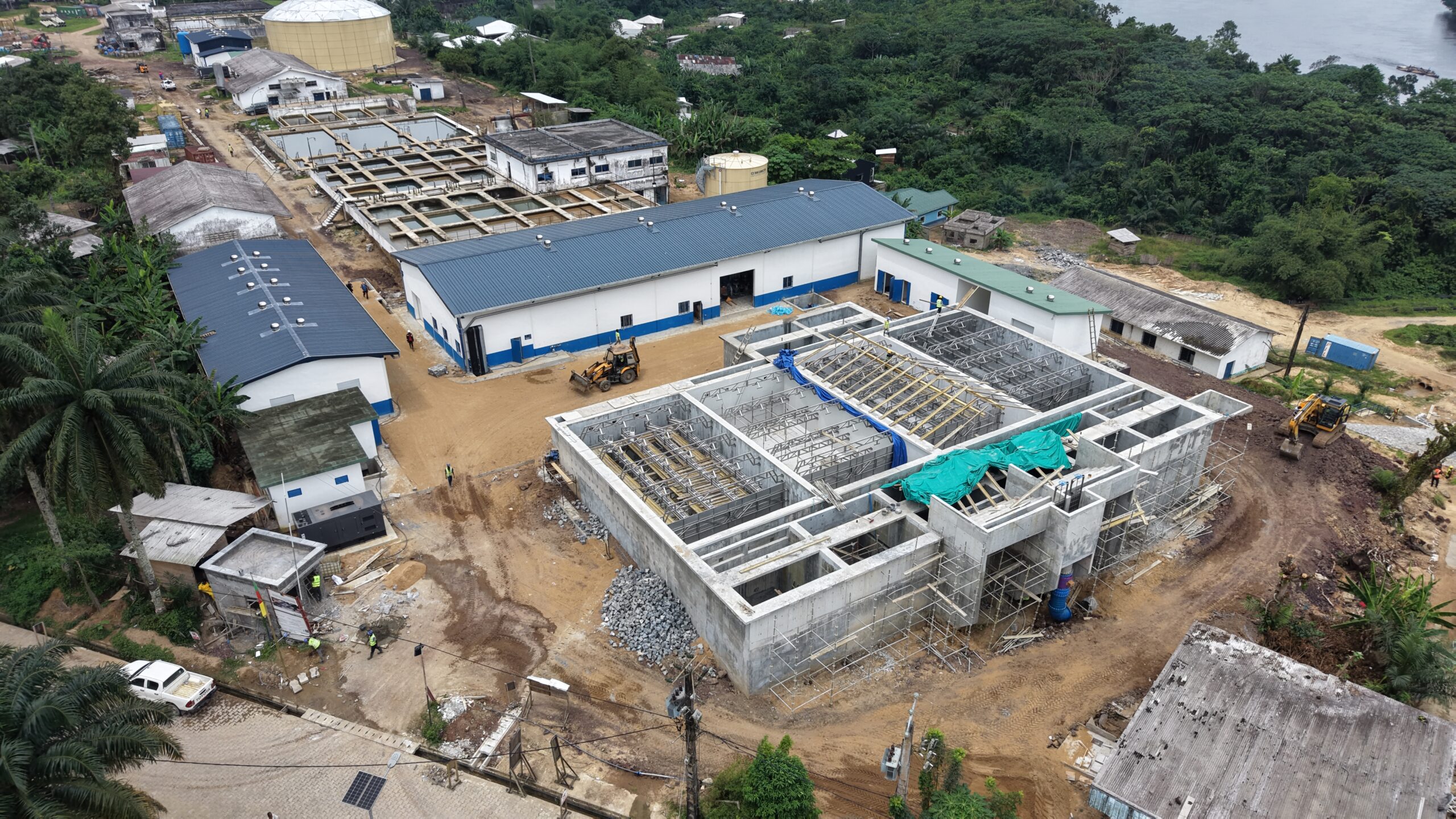
OEG’s water portfolio has also continued to progress, with important developments in both African and South African projects. In Cameroon, the company’s involvement in a major water treatment infrastructure development in Douala has advanced significantly. Appointed as owner’s engineer, OEG has supported the project through its development and implementation, with construction and delivery activities now approaching 95% completion.
The project forms part of a broader national effort to expand access to potable water and strengthen essential infrastructure. Another important development has been the progression of OEG’s work on the Amatola water project in South Africa. The feasibility study has been finalised, with the project now attracting interest from potential financing institutions as it moves towards securing the investment required for implementation.
These developments reflect the longer-term nature of infrastructure advisory, where successfully completing one phase of an assignment can establish the technical and commercial foundation for subsequent stages of project development. They also strengthen OEG’s portfolio of project references, an important consideration as the company seeks to demonstrate its capabilities to prospective international clients and partners.
Expertise and independent judgement in an AI-driven environment
The growing use of artificial intelligence (AI) is changing how consulting businesses undertake research, analysis and technical work. For OEG, however, the technology is viewed as an opportunity to improve efficiency rather than replace the expertise and independent judgement that underpin professional advisory services.
Johnson acknowledges that AI is already empowering clients to undertake certain tasks independently. However, he believes that the need for experienced, independent technical advisers remains fundamental to complex infrastructure projects.
In energy projects, for example, independent engineering assessments are often required to confirm that developments meet the necessary technical requirements before commercial operation can proceed. Similarly, lenders and investors require independent due diligence and assessments of project performance rather than relying solely on information supplied by developers.
“Anyone can attempt to prompt AI and get a response, but it is knowing what to ask and understanding whether the response is right or wrong. There are blind spots and aspects of projects that are not necessarily reflected in the information available to AI,” says Johnson.
He adds that while AI can increasingly undertake research and preliminary analytical work, experienced professionals remain essential to evaluating outputs, identifying omissions and ensuring that recommendations are appropriate to the wider project environment. “There is still a layer of engineering judgement, experience and alignment with the broader project environment that needs to be there. That is where human intervention is essential.”
Thinking globally while growing responsibly
As OEG looks towards the next five years, its priorities include consolidating its international presence, developing strategic partnerships and building the confidence required to compete in markets beyond Africa. However, the company intends to pursue this growth without compromising the operational discipline that has supported its development.
Johnson notes that OEG has remained profitable every year since its establishment, a record he attributes partly to its measured approach to recruitment, overheads and project selection. “We have been fortunate over the last five years to find good people to work with, good projects to work on and good clients. We have also been careful about how aggressively we grow and how we manage our fixed costs. If we continue thinking big but going about it carefully, I believe we will be in a good position for the next five years.”
For Dr Igboamalu, the objective is not simply to become a larger business, but to build an internationally recognised advisory brand that remains focused on its strengths and delivers work to the highest standard. The company’s growing reputation is already generating opportunities through referrals and recommendations, with established relationships increasingly helping to open doors to new clients and projects.
Ultimately, OEG’s ambition is to demonstrate that the expertise developed through working in Africa’s complex infrastructure environment has international relevance and value. Its next chapter will be about building on that foundation, establishing trust in new markets and taking African consulting expertise onto the global stage.
Ends
Connect with Osmotic Engineering Group on Social Media to receive the company’s latest news
LinkedIn: https://www.linkedin.com/company/osmoticengineeringgroup/
Facebook: https://www.facebook.com/Osmotic-Engineering-Group-105648608471620
Ends
Notes to the Editor
To download hi-res images for this release, please visit http://media.ngage.co.za and click the Osmotic Engineering Group link to view the company’s press office.
About Osmotic Engineering Group
Osmotic Engineering Group (OEG) is an infrastructure advisory and engineering firm helping government and private sector clients around the world plan, procure and deliver infrastructure projects. Established in 2020, OEG works across energy, water, digital and telecommunications, and the built environment. Its services range from strategy, technical due diligence and transaction advice to Owner’s Engineer, project management and asset management.
Osmotic Engineering Group Contact
Dr Tony Igboamalu
CEO
Phone: +27 10 502 1976
Email: support@oegafrica.com
Web: https://osmoticengineeringgroup.com/
Media Contact
Andile Mbethe
Account Executive
NGAGE Public Relations
Phone: (011) 867-7763
Cell: 073 565 6536
Email: andile@ngage.co.za
Web: www.ngage.co.za
Browse the NGAGE Media Zone for more client news articles and photographs at http://media.ngage.co.za
-
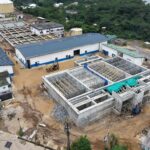
Aerial view of Osmotic Engineering Group’s water infrastructure project in Douala, Cameroon
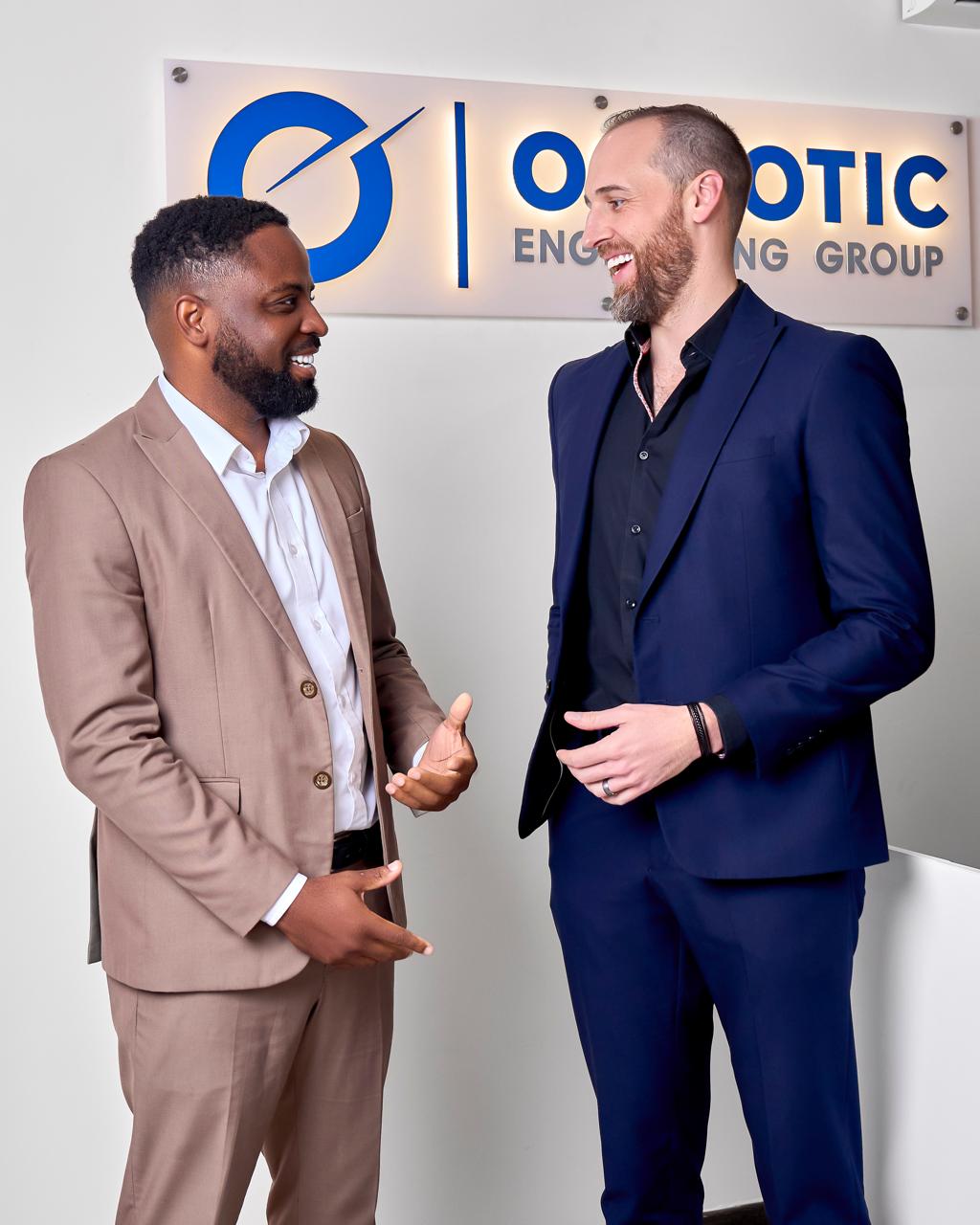
Dr. Tony Igboamalu, CEO at Osmotic Engineering Group and Andrew Johnson, Energy Director at Osmotic Engineering Group. - Osmotic Engineering Group takes its African experience to the world_approved
Osmotic Engineering Group takes its African experience to the world_approved