Developing the technical skills required by South African industry calls for closer collaboration between employers, education and training institutions and government. Quality apprenticeships offer an important way to connect education with the realities of the workplace, giving young people opportunities to develop practical capabilities while helping businesses build the skills they need. In South Africa, where the youth unemployment rate among people aged 15 to 34 reached 47.4% in the second quarter of 2026, according to Stats SA, strengthening these pathways into employment is particularly important.
Through its apprenticeship and learnership programmes, Bühler Southern Africa is contributing to this skills-development effort while engaging with industry partners through the Global Apprenticeship Network (GAN) to explore ways of strengthening quality workplace training.
Bühler’s commitment to apprenticeship development is underpinned by an established global programme based on the Swiss dual-vocational model, which combines practical workplace experience with classroom learning. In 2025, the company trained 524 apprentices across 24 locations worldwide, with programmes spanning ten vocational fields.
The three- and four-year courses are continually adapted to reflect changing industry requirements. In Switzerland, 67% of apprentices who completed their training in August 2025 chose to continue their careers with Bühler, demonstrating the potential of structured workplace learning to develop and retain skilled talent.
Connecting skills development with industry needs
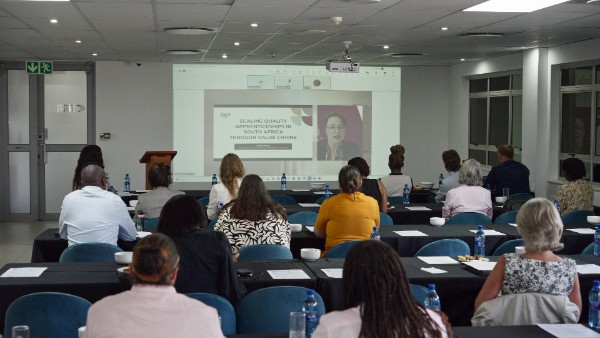
The importance of building stronger apprenticeship pathways was a central theme at the second GAN event hosted by Bühler Southern Africa in late October 2026. Titled ‘Advancing Value-Chain Quality Apprenticeships in South Africa, Part 2’, the event brought together industry representatives, skills development specialists and international partners to consider how quality apprenticeships can be implemented more effectively and made accessible to more young people. Building on discussions held in June, the meeting focused on moving from broad agreement about the value of apprenticeships towards practical collaboration between employers and other stakeholders.
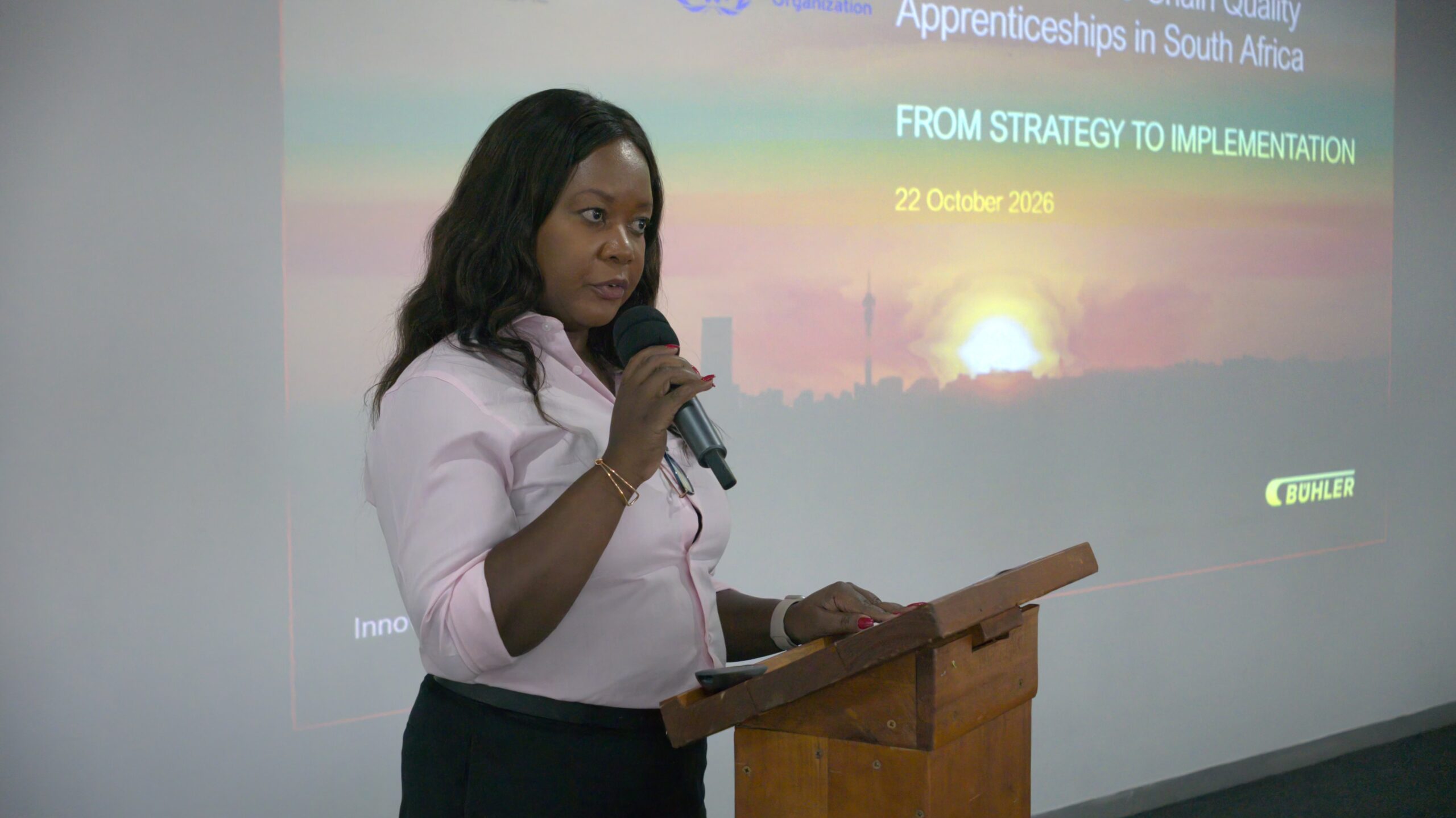
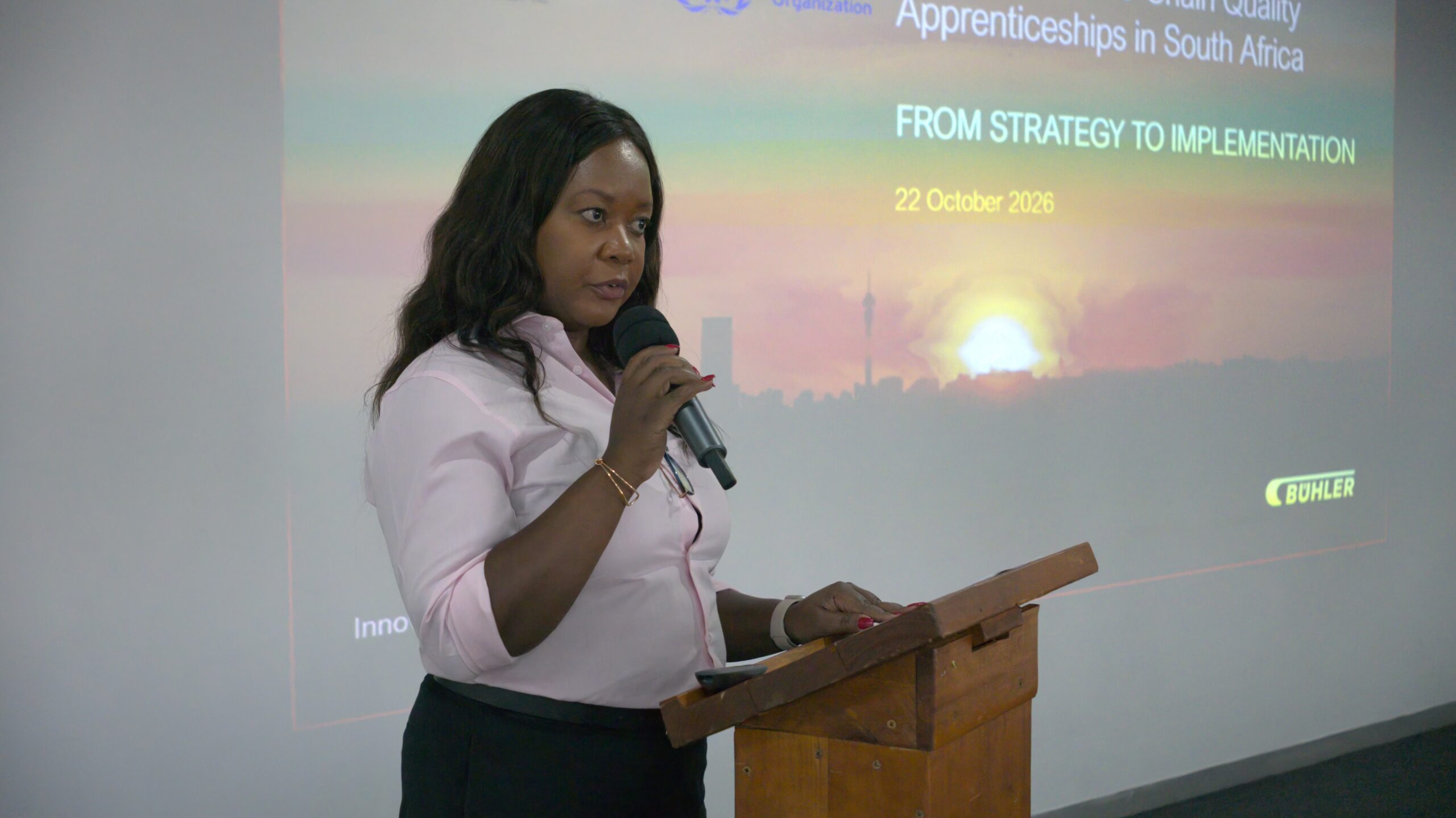
Rachael Madziwanyika, CFO and Head of HR at Bühler Southern Africa, highlighted the importance of making these partnerships work in practice. “Our question today is how do we make them work together in practice and at a scale that actually creates value,” she said.
The discussion recognised that expanding quality apprenticeships requires more than individual company initiatives. Employers need to work with training institutions and government to ensure that programmes respond to changing industry requirements, provide relevant workplace experience and support progression into sustainable careers.
Kathryn Rowan, Executive Director of GAN Global, provided an international perspective on quality apprenticeship practices and the importance of giving employers practical guidance on programme governance, partnerships, mentoring, supervision, inclusion and progression.
She also emphasised the need to demonstrate the return on investment from apprenticeship programmes, helping businesses understand the value of participating and supporting their expansion. Commenting on the collaborative work taking place in South Africa, Rowan said: “I think it is fantastic that you have led the way in such a short period of time.”
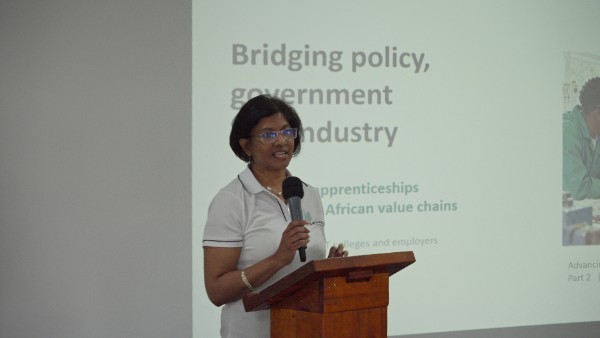
Shanita Roopnarain, CEO of the Swiss-South African Cooperation Initiative (SSACI), focused on the need to strengthen connections between policy, training institutions and employers. She highlighted the importance of aligning occupational training with workplace requirements and ensuring that young people develop both technical and broader professional skills.
Emphasising the need for collective action, Roopnarain said: “We cannot do this. Employers cannot do it by themselves. Government cannot do it by themselves. And we have got to find the medium to be able to work together.”
For businesses, this means considering how they can contribute not only by taking on apprentices themselves, but also by extending opportunities and sharing experience across their supply chains, including with smaller enterprises.
Collaboration beyond company boundaries
The discussions also explored how employers could learn from one another and develop partnerships that extend the reach of existing apprenticeship programmes. One example under consideration is a proposed apprentice exchange between Bühler Johannesburg and National Foods Zimbabwe.
The initiative emerged from the earlier discussions between the organisations and is intended to provide apprentices with additional workplace exposure and opportunities to develop their technical and professional capabilities.
The proposed pilot would involve three apprentices from each company spending time at the partner organisation, with a three-month placement and a potential start date of 1 February 2027 under consideration. The arrangements remain subject to the finalisation of the relevant agreements, budgets and logistical requirements.
Beyond the exchange itself, the initiative illustrates how companies can explore practical ways to share knowledge and experience, while creating opportunities for apprentices to gain exposure to different working environments.
For Bühler Southern Africa, participation in GAN provides an opportunity to share its experience and encourage greater collaboration across industry. “Developing the skills needed for the future requires sustained commitment from employers, training institutions and government, as well as meaningful opportunities for young people to learn and progress,” concludes Madziwanyika.
Media contacts:
Taryn Browne, Head of Marketing, Southern Africa
Bühler (Pty) Ltd.
Bühler Southern Africa
Phone: +27 11 801 3500
Mobile: +27 66 307 4618
E-mail: taryn.browne@buhlergroup.com
Dalen Jacomino Panto, Media Relations Manager
Bühler AG, 9240 Uzwil, Switzerland
Phone: +41 71 955 37 57
Mobile: +41 79 900 53 88
E-mail: dalen.jacomino_panto@buhlergroup.com
Katja Hartmann, Media Relations Manager
Bühler AG, 9240 Uzwil, Schweiz
Mobile: +41 79 483 68 07
E-mail: katja.hartmann@buhlergroup.com
About Bühler
Bühler is driven by its purpose of creating innovations for a better world, balancing the needs of economy, humanity, and nature in all its decision-making processes. Billions of people come into contact with Bühler technologies as they cover their basic needs for food and mobility every day. Two billion people each day enjoy foods produced on Bühler equipment; and one billion people travel in vehicles manufactured using parts produced with Bühler solutions. Countless people wear eyeglasses, use smart phones, and read newspapers and magazines – all of which depend on Bühler process technologies and solutions. As a technology partner with this global relevance, Bühler is in a unique position to help unlock new pathways to profitable sustainability and, through its solutions and services, turn global challenges into opportunities.
For this reason, in 2019, Bühler committed to having the solutions ready to multiply that reduce energy, waste, and water by 50% in the value chains of its customers. In 2025, it established that in 11 of the key 15 value chains, reductions of at least 50% are feasible in one or more key environmental dimensions. Across all value chains, savings of more than 35% are achievable in at least one category. The company is now focused on driving adoption and scaling these solutions further to multiply impact. In its own operations, Bühler has developed a pathway to achieve a 60% reduction in greenhouse gas emissions by 2030 (Greenhouse Gas Protocol Scopes 1 & 2, against a 2019 baseline).
Bühler spends up to 5% of its turnover on research and development annually to improve both the commercial and sustainability performance of its solutions, products, and services. In 2025, the company employed 12,090 people who generated a turnover of CHF 2.8 billion. As a Swiss family-owned company with a history spanning 166 years, Bühler is active in over 140 countries around the world and operates a global network of 105 service stations, 27 manufacturing sites, and research and training centers in 26 locations.
-

Rachael Madziwanyika, CFO and Head of HR at Bühler Southern Africa
Bühler Southern Africa is engaging with industry partners through the Global Apprenticeship Network (GAN) to strengthen workplace
Bühler’s apprenticeship programme combines practical workplace experience with classroom learning, following the established Swiss dual-vocation
Shanita Roopnarain, CEO of the Swiss-South African Cooperation Initiative (SSACI) - Connecting South Africa’s young talent with the skills industry needs_approved
Connecting South Africa’s young talent with the skills industry needs_approved