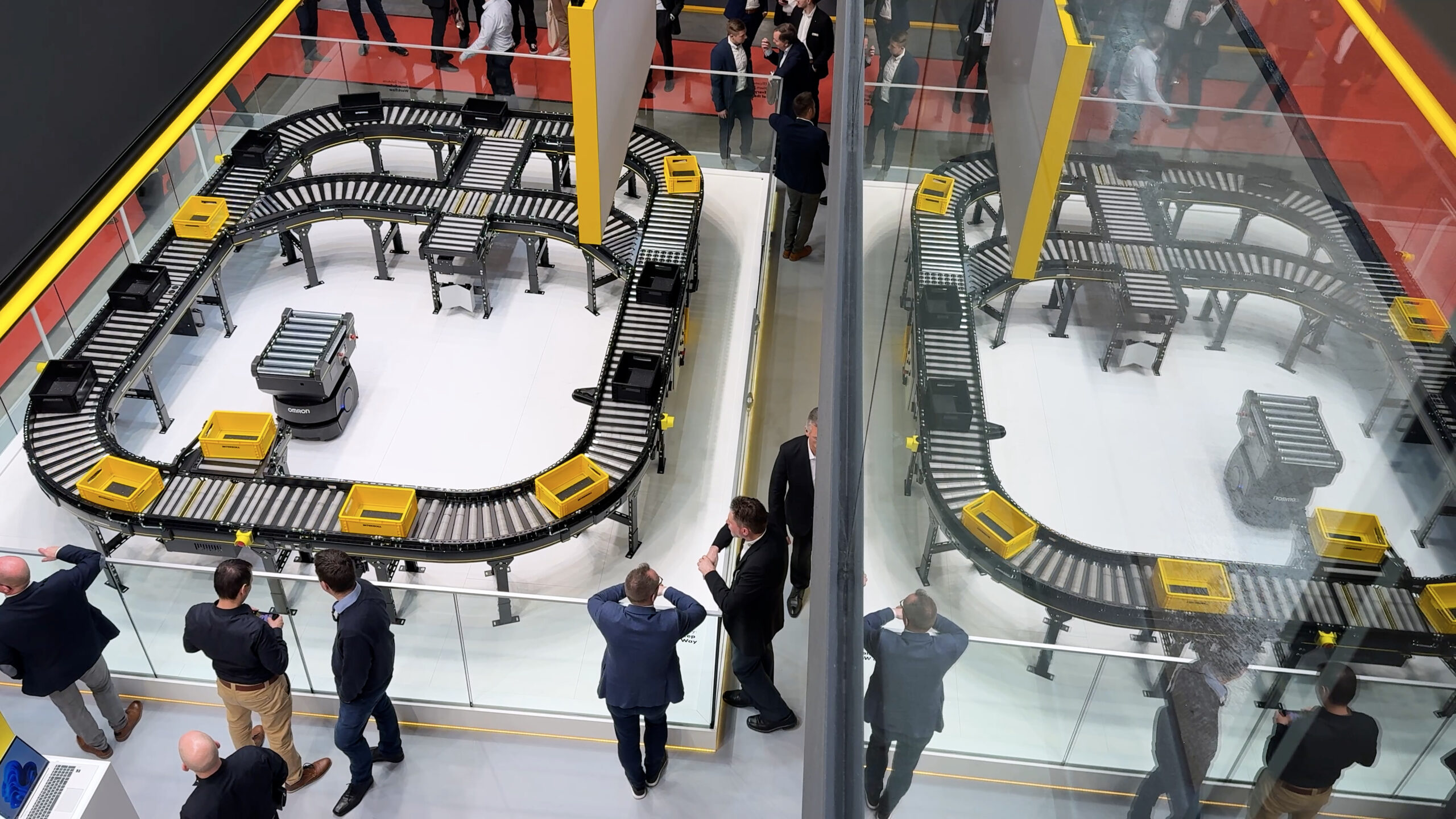
The Modular Conveyor Platform (MCP) from Interroll gives manufacturers and material-handling operators the flexibility to configure, expand and adapt conveyor systems as operational requirements evolve
As manufacturers, warehouses and distribution centres contend with changing volumes, product requirements and space constraints, conveyor infrastructure increasingly needs to do more than simply move goods from one point to another.
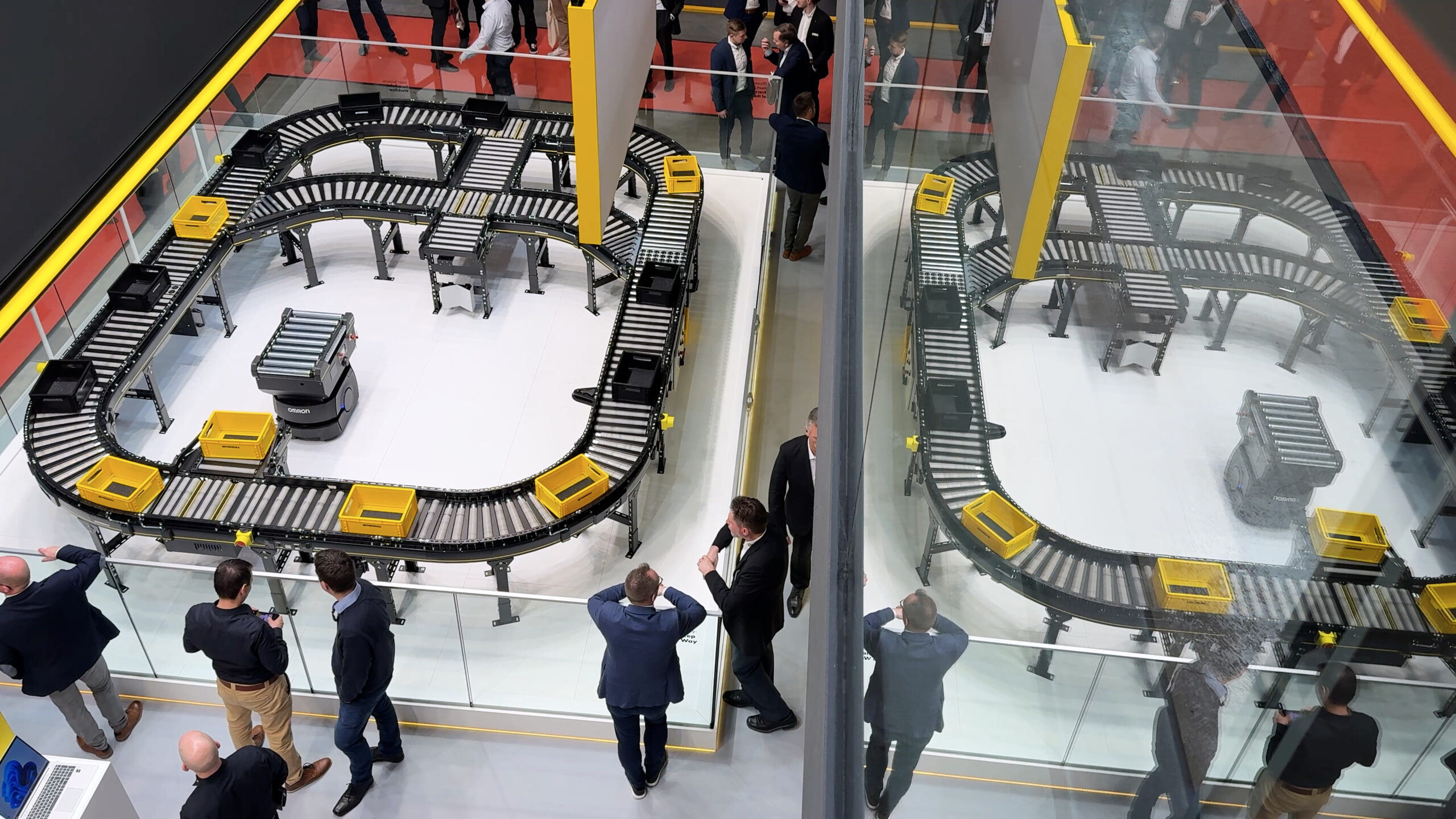
The Modular Conveyor Platform (MCP) from Interroll is designed around this need for flexibility, providing a range of matched conveyor modules that can be configured to meet different material-flow requirements. The platform incorporates roller and belt conveyors, curves, merges, transfers, vertical conveyors, high performance diverts and spiral lifts, enabling systems to be configured around the requirements of individual operations.
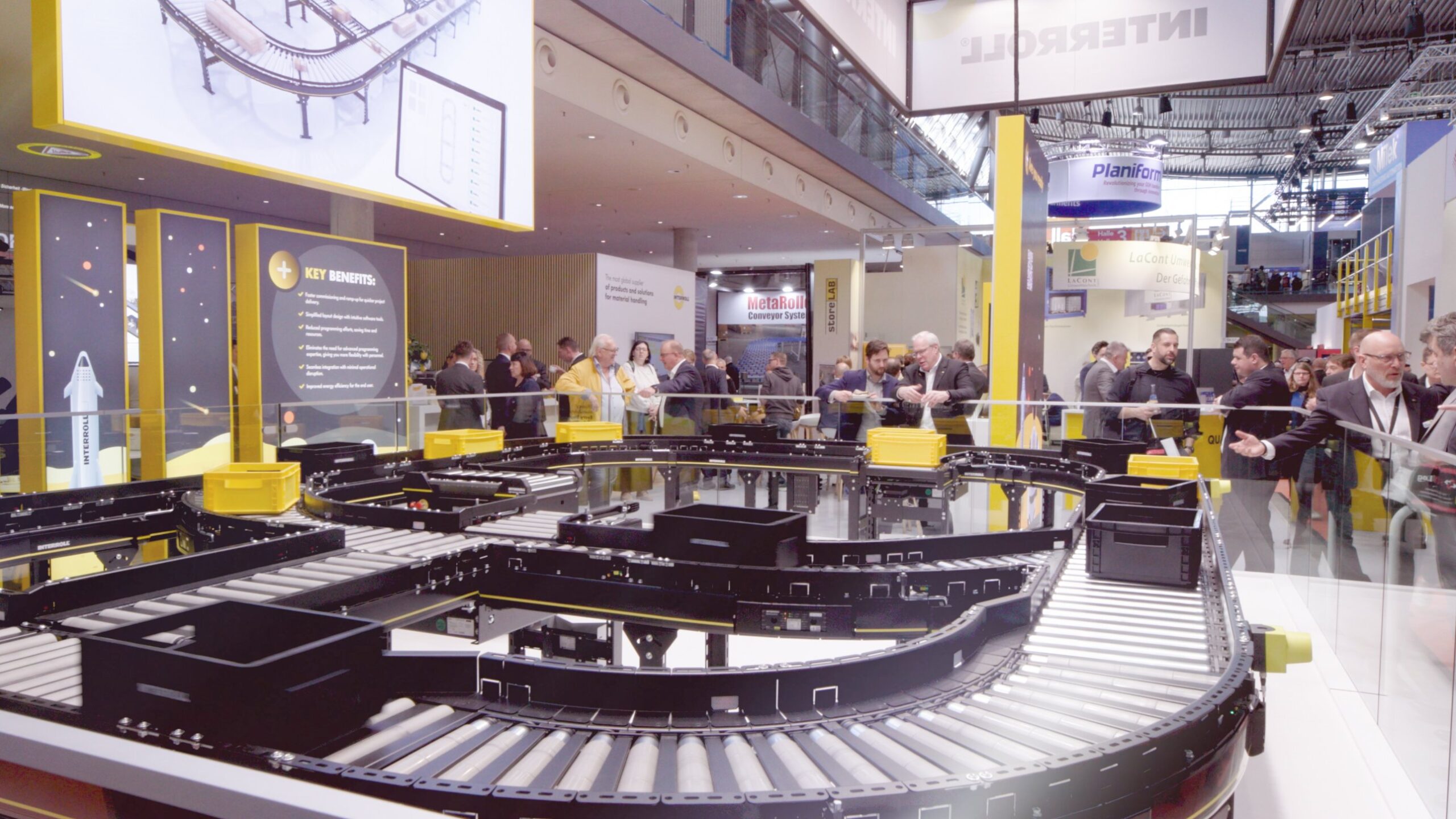
The move towards more flexible automation reflects the changing demands being placed on material-handling systems. “Today’s material-handling environment is not static. Volumes change, product mixes change and businesses may need to adapt their facilities as they grow,” comments Gavin Hall, Managing Director of Interroll South Africa.
“A conveyor system therefore needs to provide more than capacity today but must give the operation room to evolve. Modularity provides that flexibility by allowing different conveyor functions to be combined within a common platform,” explains Hall.
One platform, multiple material-flow requirements
At the heart of MCP is the ability to combine compatible modules to create different conveyor configurations. Rather than approaching every conveyor installation as a completely bespoke system, the platform provides a range of standardised building blocks that can be configured according to the application.
This includes solutions for straight conveying, curves, merges and transfers, as well as technologies for changing elevation and diverting products. Interroll’s current MCP portfolio includes both roller and belt conveyor modules and a range of powered and non-powered options.
This modular approach can simplify the process of designing material-flow systems while providing scope for future changes. “The value of a modular platform is that the system architecture does not have to be reinvented every time the requirement changes,” adds Hall.
“The different modules are designed to work together, giving integrators a technology base from which they can build a solution that is appropriate to the application, while retaining the flexibility to modify or extend that solution as requirements develop.”
Designing conveyor systems for change
For businesses investing in automation, scalability is becoming an increasingly important consideration. A conveyor installation represents a significant investment, and operational requirements may change considerably over its working life.
MCP’s modular architecture is intended to support this changing environment, with modules available for different conveyor functions and configurations. Interroll has also designed its conveyor modules with installation and expansion in mind, supporting a more standardised approach to conveyor system development.
The result is an approach in which flexibility becomes part of the original system design rather than an afterthought. “Future-proofing does not necessarily mean trying to predict exactly what an operation will look like five or ten years from now,” says Hall.
“It means giving the business an automation platform that can respond when those requirements change. That is where modularity becomes particularly valuable as it creates options for the future without compromising the needs of the operation today.”
Bringing intelligence into the conveyor
The modular platform also works alongside Interroll’s RollerDrive EC5000, an integrated conveyor roller with a built-in drive designed for applications including roller conveyors, conveyor zones and zero-pressure accumulation systems. Its compact design eliminates the need for conventional side-mounted or underhung drives.
The EC5000 is available in 24 VDC and 48 VDC versions and in different power variants. Its bus-interface version provides access to more than 100 parameters and supports integration into automated conveyor systems, including monitoring of operating data and more precise control of acceleration, speed, braking and product positioning.
This brings another dimension to modular automation in that the physical conveyor infrastructure can increasingly become part of the wider control and information architecture. “Modularity is not only about the mechanical design of the conveyor,” notes Hall.
“The drive technology and control architecture are equally important. With technologies such as RollerDrive EC5000, conveyor zones can be controlled more precisely and operational data can be made available to the automation system. That creates opportunities to improve both material flow and the way the system is monitored and maintained,” says Hall.
From modular hardware to intelligent automation
Interroll is extending this approach through MCP PLAY, which evolves the MCP with additional intelligence across the design, implementation, commissioning and operational management of conveyor systems.
Interroll identifies simplified planning, quicker commissioning, reduced programming effort, streamlined processes, improved energy efficiency and seamless integration among the platform’s capabilities.
This reflects a broader shift in conveyor automation: from individual mechanical components towards integrated platforms in which hardware, drive technology, controls and digital tools work together.
For operators and system integrators, the objective is not simply to install more automation, but to make that automation easier to configure, commission, operate and adapt. “We see the next stage of conveyor automation as being about making the technology itself easier to work with,” says Hall.
“The combination of modular hardware, intelligent drive technology and digital tools can simplify everything from system design and commissioning through to operation and maintenance. That is ultimately about giving businesses greater control over their material flow.”
Building flexibility into the future of material handling
As automation becomes more closely integrated into production, warehousing and distribution operations, the conveyor is taking on a more strategic role within the overall material-flow system. For Interroll, modularity provides a foundation for this evolution, allowing systems to combine different conveyor functions while supporting the integration of increasingly intelligent technologies.
“Flexibility is becoming a defining characteristic of modern automation,” says Hall. “Businesses need systems that can deliver reliably today but can also accommodate tomorrow’s requirements. Our MCP provides that foundation, while technologies such as RollerDrive and MCP PLAY extend what is possible in terms of control, intelligence and adaptability,” he concludes.
Ends
Notes to the editor
To download hi-res images for this release, please visit http://media.ngage.co.za and click on the Interroll link to view the company’s press office.
About Interroll South Africa
Established in South Africa in 1998, Interroll South Africa is part of the global Interroll Group, a leading provider of material handling solutions for industries including warehousing and distribution, courier, express and parcel, e-commerce, retail, airports, food and beverage, automotive and industrial manufacturing. The South African operation provides locally manufactured conveyor rollers, drum motor repairs, lifecycle services and access to Interroll’s comprehensive portfolio of platform-based material handling solutions, supporting customers across Southern Africa.
About the Interroll Group
Founded in 1959 and headquartered in Sant’Antonino, Switzerland, the Interroll Group is a global leader in material handling solutions. The company supplies system integrators and equipment manufacturers with platform-based products and services in the areas of Rollers & Drives, Conveyors & Sorters, Pallet Handling, Software and Controls and Spiral conveyors. Interroll solutions are used by leading brands in express and postal services, e-commerce, airports, food and beverage, fashion, automotive and other industries worldwide. The Group operates a global network of companies and serves customers in more than 100 countries.
Interroll Group Contact
Irina Schatorjé
Marketing Director
Tel: +49 2433 526 1917
Mobile: +49 1511 229 2859
Email: i.schatorje@interroll.com
Website: https://www.interroll.com/
Media Contact
Thobile Ndlovu
Senior Account Executive
NGAGE Public Relations
Telephone: 011 867 7763
Cell: 073 574 2931
Email: thobile@ngage.co.za
Web: www.ngage.co.za
Browse the NGAGE Media Zone for more client press releases and photographs at http://media.ngage.co.za
-
The MCP from Interroll enables systems to be configured around the requirements of individual operations
The move towards more flexible automation such as the MCP from Interroll reflects the changing demands being placed on material-handling systems
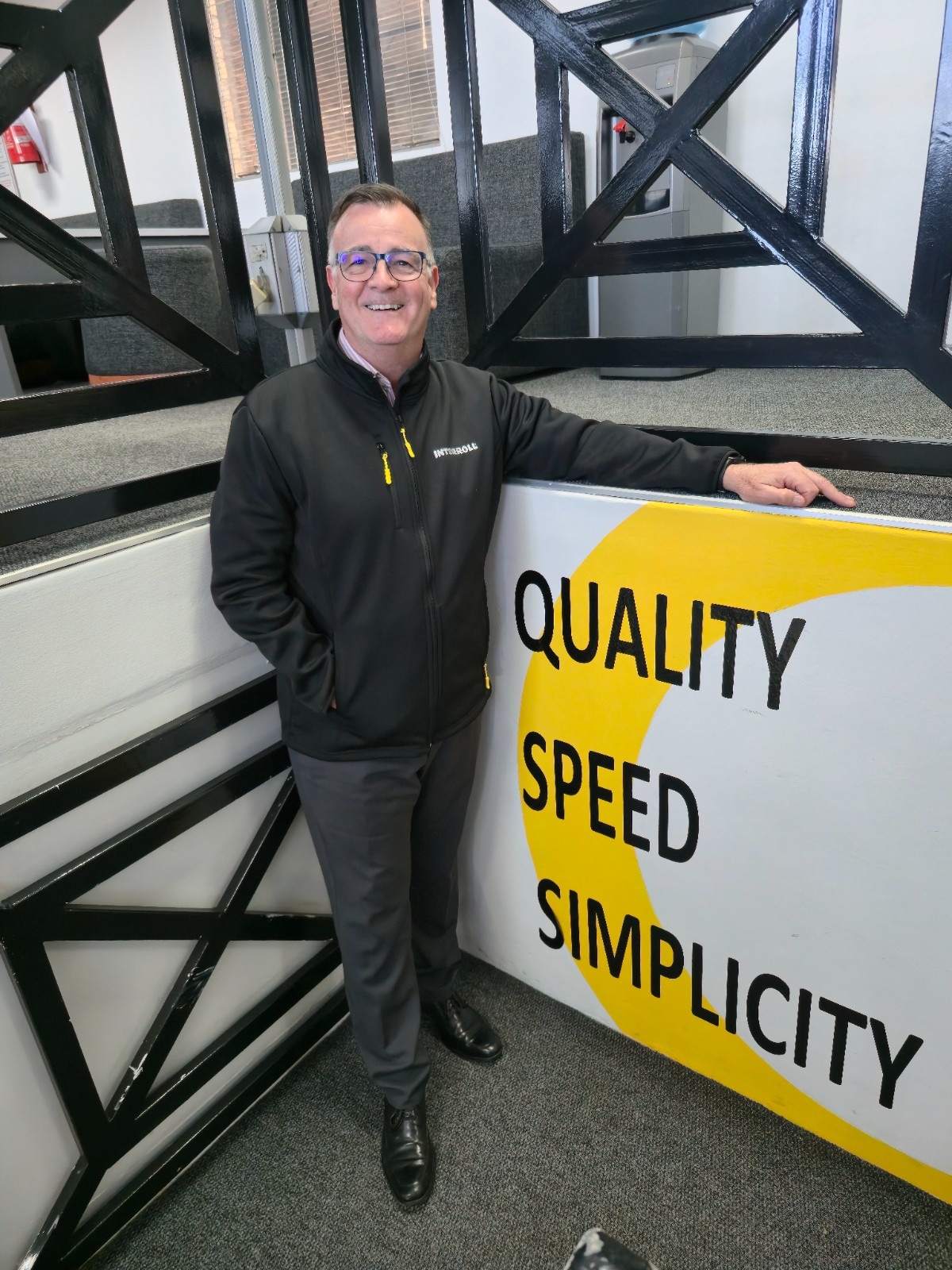
Gavin Hall, Managing Director of Interroll South Africa - Interroll puts modularity at the heart of smarter conveyor automation_approved
Interroll puts modularity at the heart of smarter conveyor automation_approved