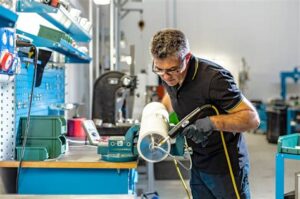
The International Zinc Association (IZA) Africa is urging infrastructure developers and consulting engineers to prioritise durability and sustainability by adopting hot dip galvanized reinforcing steel (rebar) in concrete used in civil engineering and construction. With the South African economy demanding cost effective and resilient infrastructure, galvanized rebar presents a proven, cost-effective solution for extending the lifespan of vital structures while reducing maintenance costs.
Concrete is one of the most widely used construction materials globally, yet its strength and longevity are frequently compromised by the corrosion of embedded steel rebar. With South Africa’s long coastline and six large coastal cities and ports and billions of rands infrastructure, the case for galvanizing concrete rebar becomes ever more urgent.
Hot dip galvanized rebar involves coating steel with a protective layer of zinc, offering both barrier and sacrificial protection against corrosion. The alkalinity of concrete prevents the zinc coated rebar from corroding and the galvanized coating is an excellent barrier. This dual mechanism not only prevents rust from forming but also prolongs the structural integrity of concrete in aggressive environments such as coastal zones, marine facilities, bridges, and seaside infrastructure.
The benefits of using galvanized rebar in concrete are multifaceted. Firstly, its exceptional corrosion resistance extends the service life of concrete structures, reducing the need for costly maintenance and repairs. Secondly, galvanized rebar can enhance the bond strength between the rebar and concrete, leading to improved structural performance. In addition, galvanized rebar can contribute to sustainable construction practices by reducing the environmental impact associated with premature failure and replacement of concrete structures.
“South Africa and the wider African continent stand at a crossroads where long-term investment in sound infrastructure must meet the realities of atmospheric and environmental resilience,” says Simon Norton, Director of IZA Africa. “Galvanized rebar is not just a technical upgrade; it is an economic and environmental imperative. The City of Cape Town now mandates its use in all new bridge constructions and repairs, a policy that other municipalities and countries should consider adopting.”
Galvanized rebar significantly reduces the risk of structural cracking, spalling, and corrosion-induced failure. Its compatibility with concrete chemistry, even in the face of carbonation and chloride ingress, makes it ideal for modern, sustainable construction practices. Case studies, include marine-facing retaining walls at Clovelly, Cape Town, the N1 road bridge walls near Woodstock and the sea retaining wall at Green Point consistently show its superior performance compared to traditional uncoated rebar steel.
There are 24 hot dip galvanizing plants in South Africa, including excellent plants in Cape Town, Johannesburg, Port Elizabeth, Durban and Richards Bay, that can galvanize reinforcing steel for concrete. “Consulting engineers and civil engineers should be specifying and requiring galvanized rebar in their projects,” says Norton.
“As Africa builds the long-lasting infrastructure of the future, from smart cities to resilient coastal defences, hot dip galvanized rebar offers an unmatched opportunity to reinforce both physical structures and long-term development goals,” concludes Norton.
Ends
Connect with the International Zinc Association on social media to receive its latest news.
Facebook: https://bit.ly/3uNP5w7
LinkedIn: https://bit.ly/3uNSAmb
Notes to the Editor
To download hi-res images for this news article, please visit http://media.ngage.co.za and click the International Zinc Association link to view the company’s press office.
About the International Zinc Association (IZA)
The IZA is the only global industry association dedicated exclusively to the interests of zinc and its users. Operating internationally and locally in Africa through the IZA Africa Desk, the IZA helps sustain the long-term global demand for zinc and its markets by promoting such key end uses as corrosion protection for steel and zinc as essential in human health and crop nutrition. IZA’s main programmes are Zinc Use Research, Sustainability & Environment, Technology & Market Development and technical Communications.
In South Africa, the IZA plays a vital role in establishing the basis for the successful growth of the zinc industry by increasing awareness of zinc and its applications and benefits in key sectors and markets.
International Zinc Association Contact
Simon Norton
Director
IZA Africa
Phone: (021) 788 9980
Cell: 082 831 2924
Email: zinc@iafrica.com
Web: www.zinc.org
Media Contact
Andile Mbethe
Account Executive
NGAGE Public Relations
Phone: (011) 867-7763
Cell: 073 565 6536
Email: andile@ngage.co.za
Web: www.ngage.co.za
-

Galvanized rebar offers superior corrosion resistance extending concrete lifespan and cutting maintenance costs.
Galvanized rebar plays a crucial role in ensuring resilient, futureproof infrastructure
Galvanized rebar significantly reduces the risk of structural cracking spalling and corrosion-induced failure.
Galvanized Rebar.
Hot dip galvanizing steel in a molten zinc kettle.
Simon Norton, Director of the International Zinc Association (IZA) Africa - Galvanized rebar reinforces the future of infrastructure_approved
Galvanized rebar reinforces the future of infrastructure_approved