The International Zinc Association (IZA) Africa has raised the alarm and is deeply and seriously concerned about the South African Government’s proposed new Mineral Resources Bill, warning that the Bill will devastate the country’s mining sector and have far-reaching consequences for the zinc and galvanizing industries. Simon Norton, IZA Africa Director, comments that the proposed Bill is “anti-employment, racially skewed, and destructive to foreign investment.”
The concerns come as Gwede Mantashe, Minister of Mineral Resources and Energy, visited the newly launched Orion copper and zinc mine near Prieska in the Northern Cape. Norton described the visit as “deeply ironic,” given that Minister Mantashe is currently championing the very legislation that would, according to industry experts, “finally destroy South African mining.”
“Minister Mantashe’s support for the new Mineral Resources Bill, which appears to be driven more by political expedience than economic foresight, is a direct threat not only to mining, but to the broader value chain that depends on it,” comments Norton. “It beggars belief that a government would celebrate a new mining development on the one hand while pushing new legislation that would collapse the sector on the other and increase unemployment.”
IZA Africa estimates that close to 50 000 tons of Special High-Grade (SHG) zinc, currently worth about R2.4 billion, is used annually in galvanizing steel for use directly and indirectly in mining in the Gauteng, Northwest, Mpumalanga and Northern Cape provinces. This equates to the use of over a million tonnes of galvanized steel for mining and steel structures.
Gauteng and KwaZulu-Natal are home to most South African hot-dip galvanizers that service South Africa’s more than 200 active mines and the associated industrial and civil infrastructure, with a broader mining footprint that includes over 500 mines at various stages of operation or development.
The ports of Durban and Richards Bay play a crucial role in supporting the mining industry in the interior and the massive industrial infrastructure that stands behind mining. A collapse in mining would have a ripple effect across logistics, manufacturing, infrastructure, and construction industries, the majority of which benefit from gold, coal, chrome, platinum, copper and zinc mining.
“Until 2011, Exxaro’s Zincor refinery in Johannesburg produced 117 000 tons of SHG zinc annually, most of which was used locally,” adds Norton. “That demand was driven by a vibrant and growing South African mining industry. If the current Bill goes forward, we risk not only losing mining capacity but also undermining key downstream industries such as hot dip galvanizing, steel fabrication, and infrastructure development.”
Norton adds: “IZA Africa calls on lawmakers and coalition partners within the Government of National Unity (GNU) to scrap the proposed new mining legislation and rather work to encourage investment in mineral exploration, mining and mineral processing, eliminate government bureaucracy, and get rid of racial selection and B-BBEE regulations.”
He concludes: “This is not just a mining issue, it is a national economic crisis in the making. We must fight this Bill tooth and nail to protect South African livelihoods, encourage investment, grow employment, and boost our mining and industrial sectors.”
Ends
Connect with the International Zinc Association on social media to receive its latest news.
Facebook: https://bit.ly/3uNP5w7
LinkedIn: https://bit.ly/3uNSAmb
Notes to the Editor
To download hi-res images for this news article, please visit http://media.ngage.co.za and click the International Zinc Association link to view the company’s press office.
About the International Zinc Association (IZA)
The IZA is the only global industry association dedicated exclusively to the interests of zinc and its users. Operating internationally and locally in Africa through the IZA Africa Desk, the IZA helps sustain the long-term global demand for zinc and its markets by promoting such key end uses as corrosion protection for steel and zinc as essential in human health and crop nutrition. IZA’s main programmes are Zinc Use Research, Sustainability & Environment, Technology & Market Development and technical Communications.
In South Africa, the IZA plays a vital role in establishing the basis for the successful growth of the zinc industry by increasing awareness of zinc and its applications and benefits in key sectors and markets.
International Zinc Association Contact
Simon Norton
Director
IZA Africa
Phone: (021) 788 9980
Cell: 082 831 2924
Email: zinc@iafrica.com
Web: www.zinc.org
Media Contact
Andile Mbethe
Account Executive
NGAGE Public Relations
Phone: (011) 867-7763
Cell: 073 565 6536
Email: andile@ngage.co.za
Web: www.ngage.co.za
-

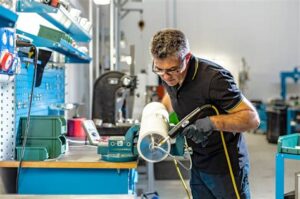
Simon Norton, Director of the International Zinc Association (IZA) Africa - Alarm bells are ringing for SA mining and galvanizing industry_approved
Alarm bells are ringing for SA mining and galvanizing industry_approved