Industrial organisations are operating in an environment defined by continuous disruption. What was once episodic and manageable has become persistent and interconnected. Inflationary pressure, geopolitical instability, energy volatility and rapid technological change are no longer separate challenges. They are converging to reshape how industries operate, compete and grow.
The message emerging from RS Connect is clear. Organisations can no longer rely on internal optimisation alone to secure performance. Competitive advantage is increasingly being determined by the strength of external relationships, shared capability and coordinated action across value chains.
The next decade of industrial performance will be defined by ecosystem thinking rather than organisational isolation.
Disruption is both cyclical and structural
At RS Connect, global strategist Dr Abdullah Verachia highlighted a critical distinction shaping industrial decision making today. Organisations are operating under the combined pressure of cyclical fluctuations and deeper structural transformation.
Cyclical pressures such as inflation changes, demand variability and short-term cost movements continue to influence operational priorities. These are familiar dynamics that organisations have historically managed through pricing, efficiency and short-term planning.
However, these cyclical forces are now interacting with structural shifts that are fundamentally reshaping industrial systems. These include geopolitical fragmentation, supply chain realignment, climate related risk and the accelerating adoption of digital technologies.
Unlike cyclical movement, structural change does not revert. It accumulates. It reshapes the operating environment itself.
The 2026 RS and CIPS Indirect Procurement Report reflects this dual pressure clearly. Sixty eight percent of organisations identify inflation and rising costs as their most immediate challenge. At the same time, fifty percent highlight supply chain risk and forty seven percent identify geopolitical uncertainty as key medium-term pressures.
What is significant is not only the scale of these challenges but their interdependence. Short term cost volatility is now being intensified by structural shifts in supply chains and global trade. Organisations are no longer managing separate categories of risk. They are managing a connected system of pressures that reinforce one another.
This is fundamentally changing how strategy is developed. Procurement and operations can no longer separate short term cost control from long term resilience. Both must be addressed simultaneously within the same operating model.
Procurement is shifting from transactions to ecosystems
One of the clearest shifts emerging from the RS and CIPS data is the redefinition of procurement itself. Traditional fragmented supplier models are being replaced by more integrated and strategically aligned ecosystems.
Half of organisations report that they are consolidating their supplier base, while forty six percent are actively deepening strategic supplier relationships to improve resilience and efficiency.
This reflects a broader shift in thinking. Procurement is no longer viewed as a function focused on individual transactions and cost negotiation. It is increasingly being recognised as a mechanism for enabling system wide performance.
RS Connect reinforced this shift by emphasising the importance of ecosystem design. In complex industrial environments, no single organisation can resolve challenges in isolation. Performance depends on how effectively suppliers, partners and internal teams operate as an integrated network.
Procurement is therefore evolving into a coordination function that enables visibility, trust and responsiveness across the value chain. The focus is shifting from managing spend to enabling stability and adaptability across interconnected systems.
MRO is becoming a driver of operational resilience
This ecosystem shift is particularly evident in maintenance, repair and operations environments where disruption has immediate operational consequences.
The report shows that sixty six percent of organisations are able to place emergency MRO orders within a single working day. This highlights the growing importance of speed, availability and reliability in maintaining operational continuity.
MRO is no longer a secondary cost category. It is becoming a critical enabler of resilience. In volatile operating environments, even short delays in maintenance or supply can result in production downtime, safety risks and financial loss.
As a result, supplier performance in MRO is increasingly being measured not only by cost but by responsiveness and consistency under pressure.
Technology must move from ambition to execution
A recurring theme at RS Connect was the gap between digital ambition and operational reality. While technology adoption is widely recognised as essential, integration into day-to-day procurement and operational processes remains limited.
The data shows that only around one in ten organisations currently use artificial intelligence within procurement functions. At the same time, thirty eight percent of organisations do not know their internal cost to process a purchase order.
This creates a significant visibility gap. Without clear insight into internal processes, organisations struggle to identify inefficiencies, quantify improvement opportunities or build strong business cases for transformation.
The challenge is no longer awareness of digital tools. It is the ability to embed them into operational workflows in a way that delivers measurable value.
Technology only becomes impactful when it is integrated across procurement, operations, and supplier ecosystems rather than remaining in isolated pilot environments.
Sustainability and efficiency are converging
Sustainability is increasingly being integrated into core operational performance rather than treated as a standalone compliance requirement.
The RS and CIPS research shows that fifty nine percent of organisations have implemented energy management initiatives, sixty percent are using renewable energy sources, and seventy four percent prioritise waste recycling.
These initiatives are no longer isolated environmental programmes. They are being embedded into broader operational strategies focused on efficiency, cost control and resilience.
In Southern Africa, this convergence is particularly important. Sustainability initiatives are increasingly linked to energy reliability and operational continuity in environments where infrastructure constraints remain a challenge.
The result is a shift in how sustainability is defined. It is no longer only about environmental impact. It is increasingly about ensuring stable, efficient and resilient operations.
Leadership in an ecosystem environment
Dr Abdullah Verachia emphasised that organisations are no longer operating within clear or stable boundaries. Instead, they are part of interconnected ecosystems where decisions in one area have immediate consequences across multiple partners and functions.
This requires a different leadership capability. Leaders must now be able to interpret both short term disruption and long-term structural change simultaneously. They must also be able to coordinate across organisational boundaries rather than within them.
Leadership is shifting from controlling internal operations to coordinating across a wider network. Success now depends on aligning teams, partners and suppliers around shared goals in a changing environment.
Collaboration is becoming critical infrastructure
The combined insights from RS Connect and the 2026 RS and CIPS Indirect Procurement Report point to a clear conclusion. Collaboration is no longer an optional capability or soft skill within industrial organisations. It is becoming critical infrastructure.
In an environment defined by structural disruption and interconnected risk, organisational performance is increasingly determined by the strength of external relationships and the ability to operate as part of a wider ecosystem.
Organisations that invest in collaborative models will be better positioned to manage volatility, respond to change and build long term resilience.
Industrial success in the next decade will not be defined by how efficiently organisations operate in isolation. It will be defined by how effectively they connect, coordinate and collaborate across entire value systems.
-Ends-
About RS
RS is a global product and service solutions provider for industrial customers, enabling them to operate efficiently and sustainably.
We operate in 36 markets, stock over 800,000 industrial and specialist products and list an additional five million relevant for our industrial customers, sourced from over 2,500 suppliers. This extensive range supports our customers across the industrial lifecycle of designing, building, and maintaining equipment and operations.
We enhance their experience through a tailored service model, leveraging our efficient physical, digital and process infrastructure sustainably. We combine a technically led and digitally enabled approach with an exceptional team of experts; ultimately, it’s our people that make the difference.
Our purpose, making amazing happen for a better world, reflects our focus on delivering results for people planet and profit.
RS Group plc is listed on the London Stock Exchange with stock ticker RS1 and in the year ended 31 March 2024 reported revenue of £2,942 million.
PR Contact Person – RS South Africa:
Princess Tlou
Communications & Content Specialist
RS South Africa
+27 11 691 9366
Media Contact Person – NGAGE:
Thobile Ndlovu
PR Account Executive
+27 11 867 7763
Further information is available via these links:
- LinkedIn: https://www.linkedin.com/company/rs-south-africa
- Facebook: https://www.facebook.com/rssouthafrica
-

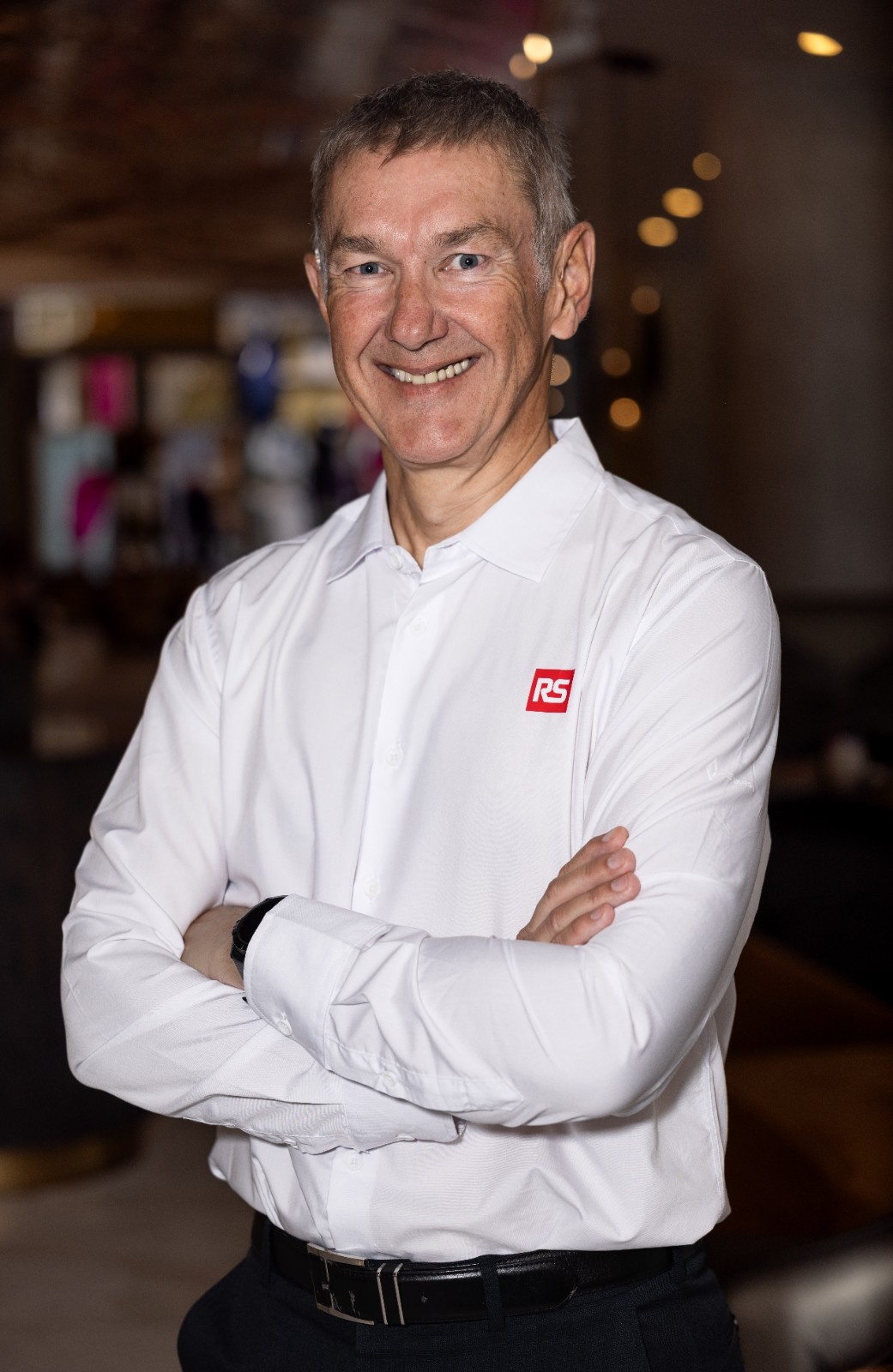
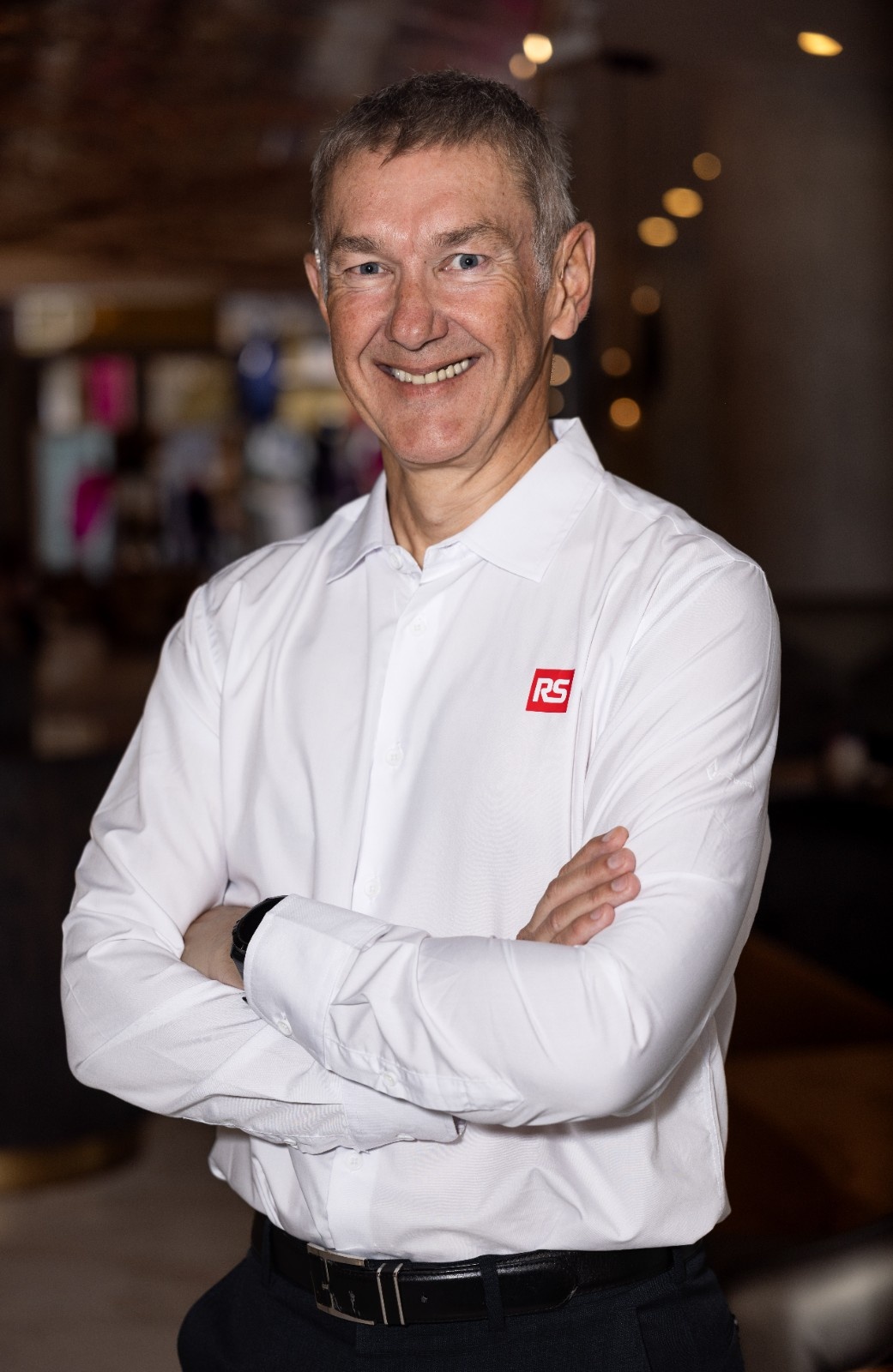
Brian Andrew, Managing Director, RS South Africa - Collaboration is now critical infrastructure for industrial growth_approved
Collaboration is now critical infrastructure for industrial growth_approved